 25 Views
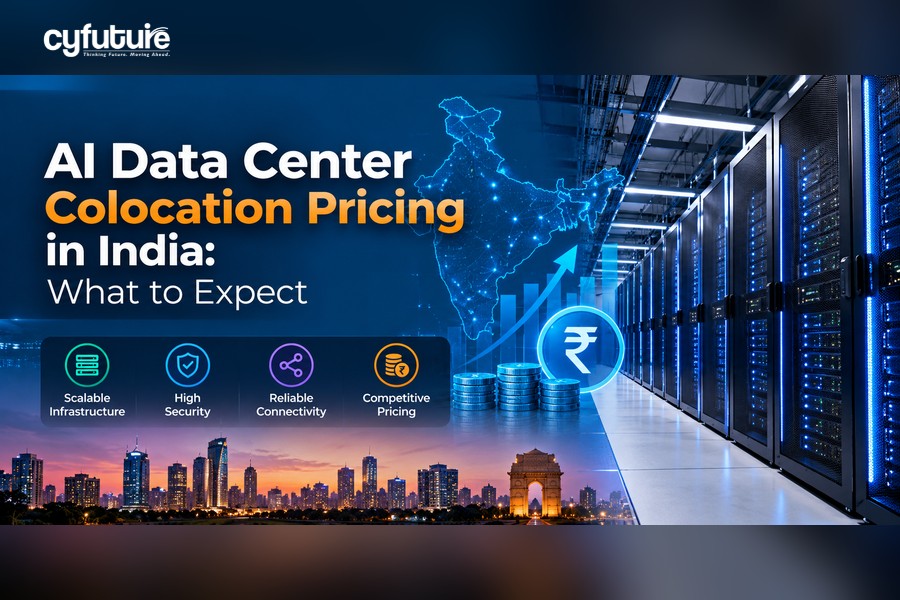
Artificial intelligence is transforming how businesses operate, analyse data, and develop digital products. From generative AI and large language models (LLMs) to machine learning, predictive analytics, and high-performance computing, organisations increasingly require powerful infrastructure to support demanding workloads. As a result, AI data centres and colocation services are becoming important infrastructure options for businesses across India.
However, deploying AI infrastructure requires more than purchasing powerful GPUs. Businesses must also consider electricity consumption, cooling systems, network connectivity, physical security, and operational reliability. Building and maintaining a dedicated facility can require substantial capital investment. AI data centre colocation offers an alternative by allowing businesses to deploy their own servers and GPU systems in a professionally managed facility.
But how much does AI data centre colocation cost in India? The answer depends on several factors, including rack space, power requirements, cooling capacity, hardware density, bandwidth, and service-level agreements.
This guide explores the key factors affecting AI data centre colocation pricing in India, the costs businesses should consider, and how to choose a suitable provider for AI workloads.
AI data centre colocation is a service that allows businesses to place their own AI servers, GPU infrastructure, storage systems, and networking equipment inside a third-party data centre.
Instead of constructing a dedicated facility, organisations rent rack space, cabinets, or private cages within an existing data centre. The provider typically supplies essential infrastructure, including power distribution, backup power, cooling, physical security, connectivity, and environmental monitoring.
AI workloads often require more specialised infrastructure than conventional enterprise applications. GPU servers used for model training and inference can consume significant amounts of electricity and generate substantial heat. Consequently, AI colocation facilities must accommodate higher power densities and appropriate cooling technologies.
AI data centre colocation can support:
For businesses that need control over their hardware without managing an entire data centre, colocation can provide a practical balance between infrastructure ownership and operational flexibility.
AI data centre colocation pricing in India varies considerably between facilities and service configurations. Standard rack colocation and high-density GPU colocation are not directly comparable because AI systems may require significantly more power, specialised cooling, and dedicated network capacity.
The following table provides illustrative budgeting ranges, not verified market quotations. Actual prices depend on the location, facility design, contract duration, power commitment, and service requirements.
| Colocation configuration | Indicative monthly budget |
|---|---|
| Partial rack or low-density deployment | ₹10,000–₹40,000+ |
| Standard rack colocation | ₹30,000–₹1,00,000+ |
| Higher-power rack configuration | ₹75,000–₹2,50,000+ |
| High-density AI/GPU rack | ₹2,00,000–₹8,00,000+ |
| Dedicated cage or private deployment | Custom quotation |
These ranges are broad planning estimates rather than confirmed national averages. They should not be treated as current vendor prices or guaranteed rates. High-density AI deployments can exceed these figures, particularly when substantial power capacity, advanced liquid cooling, or dedicated infrastructure is required.
It is also important to understand what the quoted price includes. Some providers charge separately for electricity, bandwidth, installation, cross-connects, remote-hands support, and other services. Therefore, businesses should compare the complete monthly cost rather than the advertised rack rental alone.
Rack space is one of the basic components of colocation pricing. Businesses can choose from partial racks, full cabinets, or dedicated cages depending on the size and security requirements of their deployment.
A partial rack may be suitable for a small AI inference environment or a limited number of servers. Larger deployments involving multiple GPU servers, storage systems, and high-speed networking equipment may require a full cabinet or dedicated area.
However, rack space alone does not determine the price of AI colocation. A standard rack designed for conventional enterprise servers may not support the power density or cooling requirements of a large GPU deployment.
Before selecting a configuration, businesses should assess server dimensions, rack weight limits, power distribution, network equipment, and future expansion plans.
Power is one of the most important cost drivers in AI data centre colocation.
GPU servers consume more electricity than many conventional servers, particularly during intensive training and inference operations. A deployment containing several high-performance GPUs can require substantial electrical capacity, increasing both infrastructure and operating costs.
Colocation providers may price power according to committed capacity, actual energy consumption, or a combination of both.
For example, a deployment with a 10 kW IT load running continuously for 30 days would consume approximately 7,200 kWh of electricity before accounting for the data centre’s additional facility overhead.
The actual bill will depend on the provider’s power pricing model, metering arrangements, contractual commitments, and any applicable facility charges.
Businesses should ask providers about:
Understanding these details helps organisations avoid unexpected expenses as AI workloads grow.
AI servers generate substantial heat, making cooling a critical component of colocation pricing. Conventional air cooling may be sufficient for some configurations, but high-density GPU racks can require more advanced thermal management.
Depending on the hardware and rack density, facilities may use enhanced air cooling, direct-to-chip liquid cooling, or other specialised cooling systems.
Liquid cooling can support demanding AI workloads, but it may require compatible server hardware, specialised distribution infrastructure, additional monitoring, and dedicated facility capabilities.
These requirements can affect installation costs, recurring service charges, and the range of facilities available to a business.
When evaluating an AI colocation provider, organisations should confirm the maximum supported rack density, cooling method, temperature management capabilities, and compatibility with their GPU systems.
AI infrastructure relies on reliable, high-performance networking to transfer datasets, connect distributed GPU servers, and serve inference requests.
Training clusters may require high-speed, low-latency connections between compute nodes. Enterprise inference environments may place greater emphasis on consistent connectivity, reliable access, and traffic capacity.
Colocation pricing can include a specified bandwidth allowance, committed internet capacity, or separately billed network usage. Additional cross-connects and private connectivity may also increase costs.
Businesses should evaluate:
Choosing suitable connectivity helps businesses balance network performance against infrastructure expenditure.
The location of an AI data centre can influence pricing, connectivity options, operational convenience, and access to technical support.
Major Indian data centre markets include Mumbai, Chennai, Delhi NCR, Bengaluru, and Hyderabad. However, pricing and availability vary by facility, and no city is automatically the cheapest option for every AI deployment.
Mumbai may appeal to businesses seeking connectivity to financial services and major network ecosystems. Delhi NCR may be attractive for organisations operating in northern India, while Bengaluru and Hyderabad can suit technology-led businesses and AI development teams.
The best location depends on application latency, customer geography, data residency requirements, available power, network access, and expansion plans.
Businesses should compare facilities based on their actual workload requirements rather than selecting a location solely because it has a lower advertised rack price.
Security and reliability are essential when colocating AI infrastructure that processes confidential business information or sensitive datasets.
Data centre providers may offer controlled physical access, CCTV monitoring, biometric authentication, redundant power systems, fire detection, and environmental monitoring. The availability of these features and their inclusion in the contract can influence overall costs.
Businesses should also review the provider’s service-level agreements (SLAs), maintenance procedures, incident response processes, and reporting arrangements.
Additional services, such as remote-hands support, equipment installation, hardware replacement assistance, and dedicated operational support, may be charged separately.
Although lower-cost facilities may be attractive initially, inadequate resilience or limited support can increase operational risks and create additional expenses over time.
The monthly rack or cabinet fee is only one part of the total cost of AI data centre colocation in India.
Organisations should account for the following expenses when preparing a realistic budget:
A complete cost comparison should include one-time setup charges, recurring operational costs, and any minimum contract commitments.
For AI workloads, it is particularly important to distinguish between colocation costs and GPU rental costs. Colocation generally accommodates customer-owned equipment, whereas GPU cloud services typically provide access to provider-managed computing resources under a different pricing model.
Businesses evaluating AI infrastructure often compare colocation with GPU cloud services. Both approaches can support demanding AI workloads, but their cost structures differ.
| Factor | AI data centre colocation | GPU cloud services |
|---|---|---|
| Hardware ownership | Usually customer-owned | Typically provider-owned |
| Initial investment | Higher when purchasing servers | Often lower |
| Infrastructure management | Shared between customer and provider | More infrastructure managed by provider |
| Pricing model | Rack, power, connectivity, and support charges | Usage-based, reserved, or subscription pricing |
| Hardware customisation | Greater control over owned systems | Depends on available configurations |
| Scaling | Requires equipment and capacity planning | Often faster, subject to availability |
| Best suited for | Predictable, sustained workloads | Variable workloads and rapid experimentation |
Colocation may be attractive for businesses with existing GPU hardware, predictable utilisation, and long-term infrastructure requirements. GPU cloud services may be more convenient for organisations that want to avoid hardware procurement or need computing capacity for shorter periods.
The most cost-effective approach depends on total ownership costs, utilisation, workload duration, staffing requirements, and the expected lifecycle of the hardware.
Selecting a colocation provider involves more than comparing monthly prices. Businesses should evaluate whether the facility can support their current AI workloads and accommodate future infrastructure requirements.
Consider the following factors before signing a contract:
1. Verify power capacity: Confirm that the facility can support your servers’ actual power requirements and expected expansion.
2. Assess cooling capabilities: Check whether the provider supports your GPU server configuration and required rack density.
3. Review uptime and redundancy: Understand the power, cooling, and network redundancy arrangements, along with the contractual SLA.
4. Compare complete pricing: Request an itemised quotation covering rack space, power, cooling, connectivity, installation, and support.
5. Evaluate network performance: Confirm bandwidth, latency, carrier availability, and connectivity options for your applications.
6. Check physical security: Review access controls, surveillance, visitor management, and relevant compliance documentation.
7. Plan for scalability: Ensure additional rack space, power capacity, and connectivity can be provisioned as your AI infrastructure grows.
8. Understand support arrangements: Confirm support hours, escalation procedures, remote-hands availability, and maintenance responsibilities.
Requesting a detailed proposal from multiple providers makes it easier to compare technical capabilities, contractual terms, and total operating costs.
AI data centre colocation can be a practical investment for businesses that need control over their hardware while avoiding the cost and complexity of building a dedicated facility.
It may be particularly suitable for AI companies, research organisations, enterprises deploying private AI systems, and businesses operating GPU-intensive applications at sustained utilisation levels.
However, colocation is not automatically the cheapest option. Organisations must consider hardware depreciation, power consumption, maintenance, staffing, networking, and contract commitments alongside the monthly facility charges.
A careful evaluation of workload requirements and total cost of ownership can help businesses determine whether colocation, GPU cloud, or a hybrid deployment offers the best value.
AI data centre colocation pricing in India depends on rack space, electrical capacity, cooling requirements, network connectivity, security, and the services included in the contract. Standard colocation may suit conventional infrastructure, while high-density AI deployments require more specialised facilities and can involve substantially higher costs.
Businesses should compare detailed quotations, verify GPU compatibility, assess power and cooling capabilities, and account for both recurring and one-time expenses before making a decision.
By choosing an infrastructure partner that aligns with their performance, security, and scalability requirements, organisations can build a reliable foundation for AI training, inference, and other data-intensive workloads.
Whether you are deploying a single GPU server or planning a larger AI cluster, understanding the full cost structure is the first step towards making an informed infrastructure investment.
AI data centre colocation costs in India depend on rack space, power consumption, cooling requirements, bandwidth, and security. Standard rack colocation may cost tens of thousands of rupees per month, while high-density GPU deployments can cost several lakhs or more.
The main factors include rack space, electricity consumption, GPU server density, cooling infrastructure, network bandwidth, data centre location, security requirements, and technical support services.
GPU servers consume more power and generate more heat than many conventional servers. They may require high-density racks, advanced cooling systems, specialised power distribution, and high-speed networking, increasing overall colocation costs.
Mumbai, Delhi NCR, Chennai, Bengaluru, and Hyderabad are major data centre markets in India. The right location depends on power availability, network connectivity, application latency, security requirements, and pricing.
Businesses should budget for installation, electricity, bandwidth, cross-connects, specialised cooling, remote-hands support, hardware maintenance, and security or compliance requirements. These expenses may be charged separately from the monthly rack rental.
AI data centre colocation may be cost-effective for businesses with existing GPU hardware and predictable, long-term workloads. GPU cloud services may suit businesses requiring flexible computing capacity without purchasing and maintaining physical servers. The best option depends on utilisation, hardware costs, contract duration, and operational requirements.