















Faster LLM Training
High-speed parallel storage and advanced networking accelerate GPU synchronization and dataset processing, significantly reducing model training times.


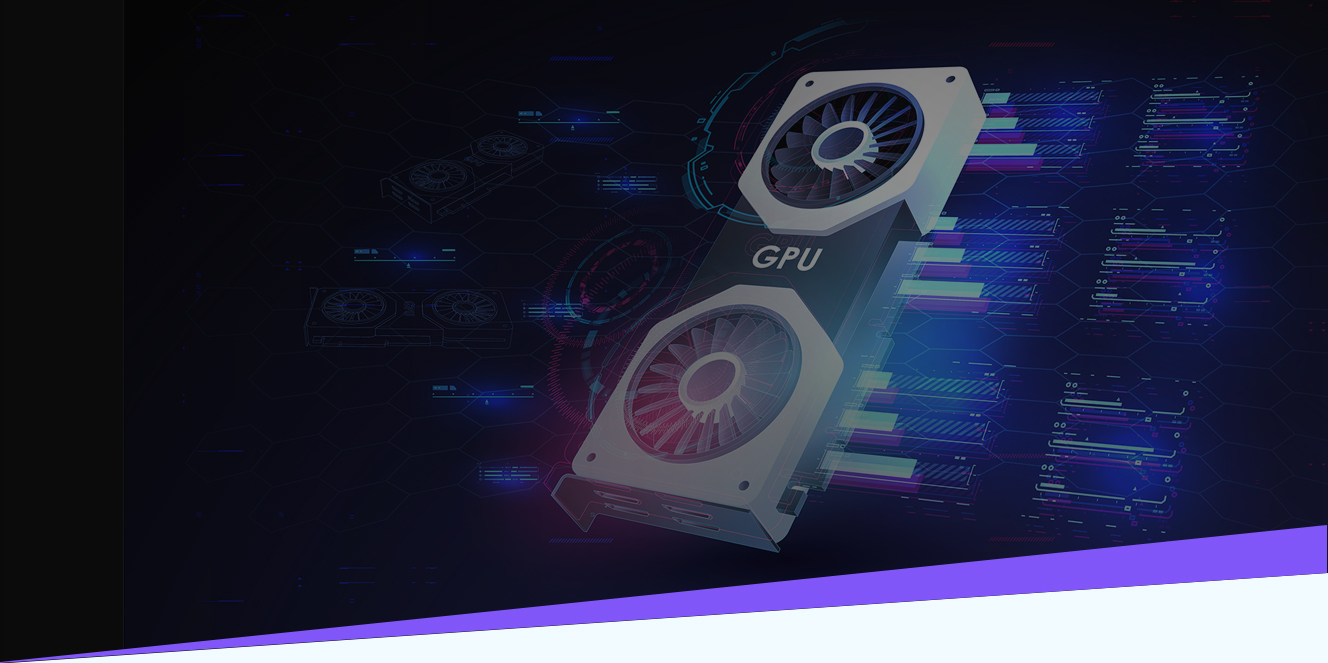
Cyfuture delivers hassle-free GPU as a Service optimized for training LLM models with fast, secure, and cost-efficient on-demand compute. Accelerate AI and analytics using dedicated BareMetal GPUs engineered for peak throughput, featuring non-blocking InfiniBand networking and high-speed parallel storage to train and fine-tune models faster. Scale seamlessly through a CNCF-certified Kubernetes platform pre-integrated with essential AI/ML tools and frameworks, while securely connecting workloads via Multi-Cloud Connect and VPN for hybrid or sovereign deployments. Benefit from fixed-price billing and substantial discounts for long-term commitments, making it ideal for AI/ML training, large-scale inference, research, and enterprise AI integration.
GPU as a Service (GPUaaS) is a cloud computing model that provides access to powerful Graphics Processing Units (GPUs) over the internet on demand. Instead of purchasing expensive GPU hardware, businesses and developers can rent high-performance GPUs through a cloud platform and use them for tasks that require massive parallel computing power.
GPU as a Service is widely used for AI model training, large language models (LLMs), deep learning, data analytics, and high-performance computing workloads. With GPUaaS, organizations can scale computing resources instantly, run intensive workloads efficiently, and pay only for the GPU resources they use. This makes it an efficient and cost-effective solution for building and deploying modern AI applications.
Providers deploy high-performance GPUs such as NVIDIA H100 or AMD MI300X in managed data centers with orchestration tools like Kubernetes and NVIDIA NGC to ensure reliable deployment, scaling, and resource management.
Users access GPU resources through web portals, APIs, or SDKs compatible with frameworks such as TensorFlow, PyTorch, and CUDA, enabling them to deploy workloads without managing underlying hardware.
GPUs are virtualized or partitioned using technologies like Multi-Instance GPU (MIG), allowing multiple users to share GPU resources simultaneously while maintaining performance and efficiency.
Resources automatically scale based on workload demand, with pay-as-you-go pricing models that charge only for the compute time used, minimizing idle costs.
The cloud provider manages maintenance, updates, security, and optimization, enabling users to focus on AI/ML training, data processing, rendering, and other GPU-intensive tasks.
GPUs execute parallel processing tasks such as AI model training or inference with minimal latency, integrating seamlessly into cloud workflows and supporting hybrid or multi-cloud environments.
Cyfuture stands out as a premier provider of GPU as a Service (GPUaaS), delivering enterprise-grade NVIDIA GPU infrastructure optimized for demanding AI, machine learning, and high-performance computing workloads. With access to cutting-edge GPUs like the H100, H200, and A100 series, Cyfuture's GPUaaS platform offers unmatched parallel processing power, massive memory bandwidth, and scalable compute resources hosted in MeitY-empaneled data centers across India. Businesses benefit from pay-as-you-go pricing that eliminates massive upfront hardware investments, while dynamic scaling ensures resources match fluctuating demands—from development testing to production inference—without overprovisioning or idle costs.
What truly differentiates Cyfuture's GPU as a Service is its comprehensive ecosystem support, including Kubernetes-native orchestration, pre-configured NVIDIA NGC containers, and seamless integration with popular frameworks like TensorFlow, PyTorch, and Hugging Face. Enhanced by robust security features such as confidential computing, DDoS protection, and compliance with global standards, Cyfuture guarantees 99.99% uptime and low-latency performance. Whether for training large language models, generative AI, or scientific simulations, Cyfuture empowers organizations to accelerate innovation with reliable, cost-effective GPUaaS tailored for the Indian market and beyond.
High-speed parallel storage and advanced networking accelerate GPU synchronization and dataset processing, significantly reducing model training times.
Scale training and inference seamlessly using Kubernetes-enabled GPU clusters optimized with AI/ML frameworks and drivers.
Secure VPN and multi-cloud connectivity allow safe data transfer between on-premises infrastructure and cloud GPU resources.
Transparent pricing models and long-term commitments help organizations control GPU infrastructure costs.
Eliminate large upfront hardware investments by using flexible pay-as-you-go GPU resources.
Automatically scale GPU resources in real time to match workload demands and optimize performance.
Access cutting-edge GPUs such as NVIDIA H100 without worrying about hardware depreciation or upgrades.
Cloud providers handle infrastructure maintenance, power, cooling, and optimization so teams can focus on AI development.
Reduce risks related to hardware failures and technology obsolescence through managed GPU infrastructure.
Deploy GPU workloads across multiple global data centers for improved latency, reliability, and performance.
GPU as a Service accelerates training of large language models and deep learning algorithms on massive datasets, enabling faster experimentation and improved model accuracy.
Utilize GPU-powered parallel processing to analyze, sort, and process large-scale datasets efficiently for big data analytics workloads.
GPUaaS supports high-performance computing for scientific research, financial modeling, engineering simulations, and other compute-intensive applications.
Businesses can integrate AI-powered features into applications using scalable GPU infrastructure optimized for production workloads.
Run real-time inference across multiple data types such as text, images, and video for advanced AI deployments.
Deliver high-quality graphics rendering for cloud gaming, virtual reality, and immersive applications with low latency GPU acceleration.
GPU clusters enable researchers to scale experiments, accelerate model development, and drive innovation in AI and scientific discovery.
