 960 Views
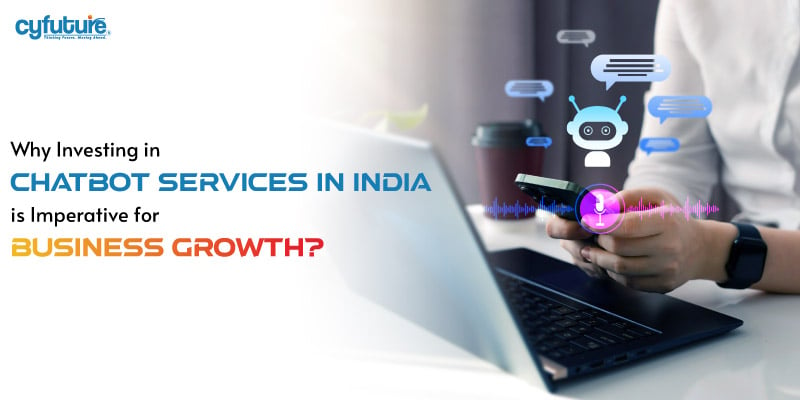
The digital landscape in India has undergone a seismic shift as we move into 2026. What were once simple, rule-based pop-ups on the corner of a website have evolved into sophisticated, multi-functional AI agents capable of driving the entire customer lifecycle. For businesses operating in India, the question is no longer whether to adopt AI chatbot services, but which specific technology stack and service provider will provide the most competitive edge in a hyper-automated market.
The India chatbot market is projected to reach over 1.5 billion dollars by 2034, with 2026 serving as a critical tipping point for enterprise adoption. As businesses across retail, banking, and healthcare seek to scale without proportionally increasing their human workforce, AI chatbot services have become the primary vehicle for achieving cost-efficient growth.
India has established itself as a global hub for conversational AI development. The ecosystem is broadly divided into two categories: specialized SaaS platforms that offer ready-to-deploy solutions and custom AI development firms that build bespoke, proprietary engines.
Several Indian-origin companies have gained international acclaim for their ability to blend high-end Natural Language Processing (NLP) with local market nuances, such as multilingual support for regional Indian languages.
Beyond these product-first companies, traditional IT giants like Cyfuture, Tata Consultancy Services (TCS), Infosys, and Wipro have launched dedicated Generative AI divisions. These divisions offer consulting-led chatbot services for large-scale enterprises that require high levels of security, compliance, and custom integration with legacy systems.
In 2026, the technical architecture of chatbot services has moved beyond simple intent recognition. The current standard is defined by several core technologies:
Modern services utilize Retrieval-Augmented Generation (RAG). Instead of relying on a pre-written script, the chatbot accesses a company’s live knowledge base, manuals, and real-time inventory to generate accurate, context-aware responses. This eliminates the “hallucination” problems that plagued earlier versions of generative AI.
The “Agentic” shift is the most significant trend of 2026. Chatbots are now “agents” that possess the authority to perform actions. If a customer in Mumbai wants to return a product, the AI agent checks the return window in the ERP, generates a shipping label, schedules a courier pickup through a logistics API, and initiates the refund in the payment gateway.
By integrating with first-party data, chatbots can recognize returning users across different channels—whether it is WhatsApp, Instagram, or a web portal. The bot remembers previous preferences and issues, providing a “concierge” experience rather than a generic support interaction.
The adoption of AI chatbot services is driven by clear, measurable business outcomes. In the competitive Indian market, these benefits often determine the difference between a thriving digital presence and an obsolete one.
By 2026, industry data suggests that Indian enterprises can save up to 40% in operational costs by automating 70-80% of routine inquiries. This is particularly vital in India, where the sheer volume of customer queries can overwhelm traditional call centers during peak seasons or sales events.
India’s linguistic diversity is a unique challenge. AI chatbot services now offer “Native Language Understanding” for Hindi, Tamil, Telugu, Kannada, Bengali, and Marathi, among others. This allows brands to penetrate Tier 2 and Tier 3 cities effectively, communicating with customers in their preferred tongue without the massive expense of hiring multilingual staff.
The modern Indian consumer expects instant responses. Chatbots ensure that inquiries made at 2 AM are handled with the same efficiency as those made during business hours. This leads to higher conversion rates, as the “friction” of waiting for a human agent is removed.
Chatbots are no longer just for support. They act as tireless sales associates. Advanced services include “Proactive Engagement,” where the bot intervenes when a user hesitates on a checkout page, offering a discount code or answering a technical query to close the sale.
Understanding the cost of AI chatbot services in India requires looking at different tiers of service. The market has matured to offer various pricing models to suit different business sizes.
| Business Tier | Estimated Monthly Cost (INR) | Typical Features |
| Small Businesses | 5,000 – 25,000 | Standard website bot, basic FAQ, limited WhatsApp integration. |
| Mid-Market | 40,000 – 1,50,000 | NLP-driven, CRM integration, multilingual support, WhatsApp Business API. |
| Enterprise | 3,00,000 – 15,00,000+ | Custom LLM, full agentic workflows, voice AI, 24/7 premium support. |
For organizations looking for a permanent asset, custom development costs in India range from 35 lakh to over 1 crore INR for a one-time build. The advantage of India as a service hub remains its competitive hourly rates for high-quality engineering, typically ranging from $25 to $60 per hour, significantly lower than Western European or North American rates.
Despite the benefits, implementing an AI chatbot service is not without its hurdles. Businesses must navigate several complexities to ensure a successful rollout.
With the Digital Personal Data Protection (DPDP) Act in full effect, Indian businesses must ensure that their chatbot service providers adhere to strict data residency and encryption standards. Leading providers now offer “Private AI” deployments where data never leaves the organization’s cloud environment.
The true power of a chatbot is unlocked only when it can “talk” to the company’s existing CRM (like Salesforce or Zoho) and ERP (like SAP or Oracle). Many businesses struggle with these integrations, often requiring specialized middleware or custom API development from their service provider.
No AI is perfect. A critical component of any chatbot service is the “Seamless Handoff” mechanism. When a query becomes too complex or emotionally charged, the system must transfer the conversation to a human agent with the full context of the previous interaction.
Selecting a partner for AI chatbot services requires a rigorous evaluation of their technical capability and industry experience. In 2026, the following criteria are essential:
As we look toward the late 2020s, AI chatbot services in India are rapidly evolving into Multimodal AI. This means chatbots will no longer be limited to text. They will interact through voice (Voice AI) and even process visual information. Imagine a customer pointing their phone camera at a broken appliance, and the AI chatbot identifying the model, diagnosing the issue, and ordering a replacement part instantly.
Furthermore, the rise of “Emotional AI” will allow chatbots to detect the tone and sentiment of a user’s voice or text, adjusting their responses to be more empathetic or professional as the situation demands.
AI chatbot services use technologies like Natural Language Processing (NLP) and machine learning to simulate human conversations. They can interact via text or voice, understand user intent, and provide automated responses across websites, apps, and messaging platforms.
AI chatbot services in India have progressed from basic rule-based bots to advanced AI-driven conversational agents. In 2026, they now include:
Businesses are adopting AI chatbots due to:
Several industries leverage AI chatbots, including:
These sectors use chatbots for customer service, lead generation, and automation.
Generative AI enhances chatbots by enabling them to:
This makes interactions more natural and engaging.
Yes, modern AI chatbots in India support multiple languages including Hindi, English, Tamil, Telugu, and more, making them highly effective for diverse audiences across the country.
AI chatbot platforms follow strict security protocols such as:
However, businesses must ensure proper implementation and monitoring for maximum security.
Small businesses can:
This helps them compete with larger enterprises.
Key trends include:
AI chatbots enhance customer experience by:
Businesses should evaluate:
Costs vary depending on features and complexity. However, many providers offer scalable pricing models, making AI chatbots accessible for startups and enterprises alike.
The future includes:
No, AI chatbots are designed to augment human support, not replace it. They handle repetitive queries while humans manage complex or sensitive issues.
AI chatbot services in India have matured into an essential pillar of the digital economy. In 2026, they are the primary interface through which businesses interact with their customers at scale. By leveraging the country’s vast engineering talent and the latest advancements in LLMs and agentic AI, Indian businesses can provide world-class customer experiences that were previously impossible.
Whether you are a startup looking to automate your FAQs or a multi-national corporation seeking to overhaul your entire customer service infrastructure, the Indian AI service market offers the tools, the talent, and the technology to turn conversational AI into a significant driver of ROI.