 548 Views
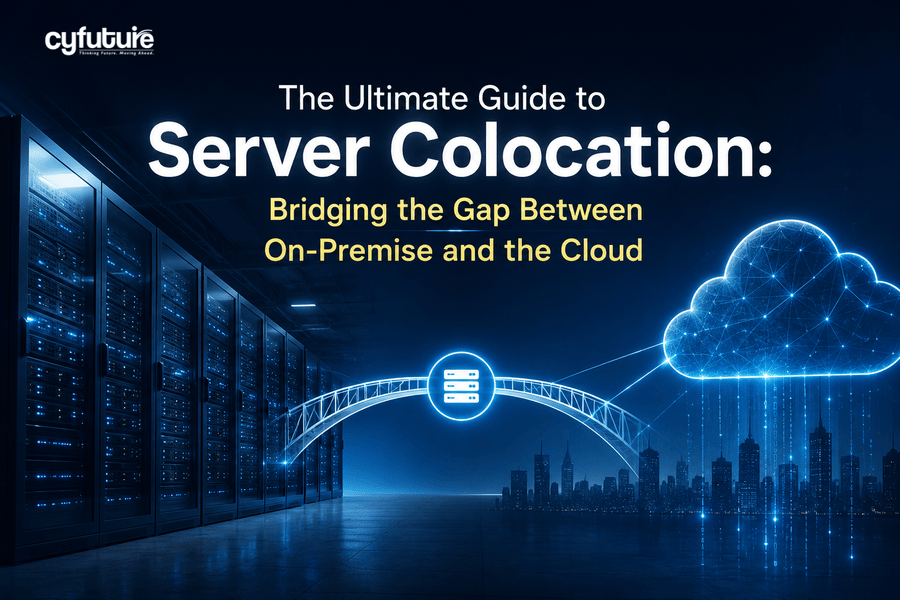
In the modern digital landscape, businesses face a critical decision regarding their infrastructure: where should the physical hardware live? While the public cloud offers convenience, many organizations require the control, performance, and cost-predictability of owning their own servers. This is where server colocation becomes the strategic middle ground.
Colocation (or “colo”) is a service where a business rents space for its servers and other computing hardware in a third-party data center provider’s facility. Instead of building a private data center—an incredibly expensive and complex undertaking—you lease a “home” for your hardware that provides power, cooling, security, and connectivity.
When you opt for colocation, you retain full ownership and control over your equipment. You provide the servers, storage, and software; the colocation provider provides the “shell” and the critical infrastructure required to keep that hardware running 24/7.
Colocation space is typically rented by the following increments:
The facility provider is responsible for the “four pillars” of data center management:
Many small to mid-sized businesses start by keeping servers in an office closet or a small server room. However, as the business scales, the limitations of “on-prem” become apparent.
A standard office building is not designed to support 99.999% uptime. A simple blown fuse or a localized power outage can take your business offline. Colocation facilities are built with N+1 or 2N redundancy, meaning every critical system has a backup.
Building a private data center requires massive upfront Capital Expenditure (CAPEX). You must invest in specialized cooling, fire suppression (like FM200 gas), and physical security. Colocation shifts this to an Operational Expenditure (OPEX) model, allowing you to leverage the provider’s multi-million dollar infrastructure for a monthly fee.
In an office, you are often limited to whichever local ISP services your block. In a colocation facility, you have access to a “Meet-Me-Room” (MMR) where you can connect directly to dozens of different global carriers. This reduces latency and provides better “peering” options for your data.
It is a common misconception that the cloud has made colocation obsolete. In reality, they serve different purposes, and many companies use a Hybrid IT approach.
|
Feature |
Server Colocation |
Public Cloud (AWS/Cyfuture) |
|
Hardware Ownership |
You own the hardware. |
The provider owns the hardware. |
|
Control |
Full control over hardware specs and OS. |
Limited to provider’s configurations. |
|
Cost Predictability |
Fixed monthly rent + power. |
Variable based on usage/egress fees. |
|
Data Privacy |
You are the only one with physical access. |
Multi-tenant environment. |
|
Scalability |
Limited by physical hardware installs. |
Near-instant scaling. |
Recently, some companies have moved workloads back from the cloud to colocation—a process called repatriation. This is usually driven by bandwidth costs. While the cloud is cheap for computing, “egress fees” (the cost of moving data out of the cloud) can become astronomical for data-heavy applications. Colocation offers predictable bandwidth pricing.
When evaluating a provider, you must look beyond the monthly price tag. The Service Level Agreement (SLA) is the most important document you will sign.
The Uptime Institute classifies data centers into four tiers:
You will typically be billed for power in one of two ways:
One of the biggest hurdles of colocation is that your hardware is no longer down the hall. If a server needs a hard reboot or a drive needs to be swapped, you don’t want to drive two hours to the facility.
Remote Hands is a service offered by the data center where onsite technicians perform physical tasks on your behalf. This includes:
For industries like healthcare (HIPAA), finance (PCI-DSS), or government (SOC 2), colocation provides a level of physical security that is difficult to achieve in a standard office.
The “where” is just as important as the “who.” When choosing a location, consider:
Transitioning to a colocation facility requires a “Migration Plan.” This isn’t as simple as unplugging a server and driving it across town.
This involves powering down your current environment, physically moving the racks, and powering them back up. The risk here is “dead on arrival” hardware—components like spinning hard drives can fail after being powered down for the first time in years.
The safer (though more expensive) method is to purchase new hardware, install it in the colocation facility, sync your data over the network, and then switch your traffic to the new location. Once the new site is confirmed stable, the old hardware is decommissioned.
Server colocation is a service where businesses place their own servers and networking equipment in a third-party data center facility that provides power, cooling, bandwidth, and physical security.
In colocation, businesses own and manage their hardware while renting data center space. In cloud hosting, the infrastructure is owned and managed by the cloud provider.
Companies choose colocation for better security, reduced infrastructure costs, improved uptime, scalability, and access to enterprise-grade data center facilities.
Yes, server colocation is ideal for hybrid cloud environments because it helps businesses connect on-premise infrastructure with public or private cloud platforms efficiently.
Businesses should evaluate factors such as data center location, uptime guarantees, security measures, network connectivity, scalability options, compliance certifications, and support services.
Server colocation remains a powerhouse strategy for businesses that demand high performance, ironclad security, and absolute control over their digital assets. It removes the burden of facility management while allowing your IT team to focus on what actually matters: managing the data and applications that drive your business forward.
Whether you are looking to move out of an overflowing office closet or seeking a more cost-effective alternative to the public cloud, colocation offers a professional, scalable, and resilient foundation for your growth.