 209 Views
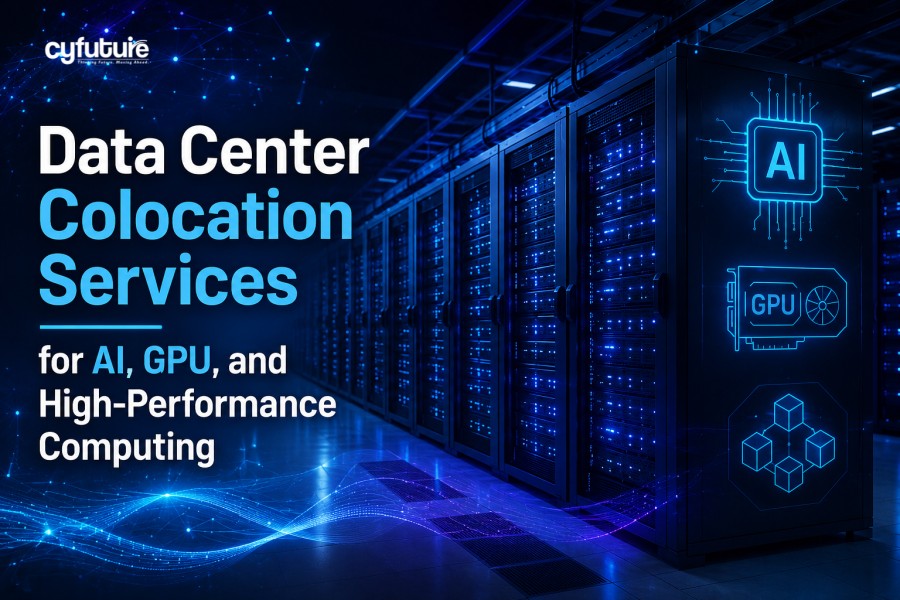
Artificial intelligence (AI), machine learning, generative AI, scientific simulations, data analytics, and other compute-intensive applications are creating unprecedented demand for high-performance computing infrastructure. Traditional IT environments often struggle to provide the power, cooling, networking, security, and scalability required by modern GPU-accelerated workloads.
Data center colocation services provide an alternative to building and operating an entirely private data center. Instead of investing heavily in facilities, organizations can deploy servers, GPU systems, and HPC infrastructure inside a professionally managed colocation facility. The provider supplies the physical infrastructure, while customers maintain control over their computing equipment and applications.
For AI and high-performance computing, however, standard colocation is not always sufficient. High-density GPU servers can require substantially more power and specialized cooling than conventional enterprise servers. Therefore, businesses need colocation facilities specifically designed to support high-density racks, advanced networking, reliable power delivery, and demanding computational workloads.
Data center colocation is a hosting model in which organizations place their own servers, storage systems, networking equipment, or GPU infrastructure inside a third-party data center.
The colocation provider typically manages the facility and provides:
The customer remains responsible for its servers, operating systems, applications, and workloads. This model gives businesses greater infrastructure control than public cloud services while avoiding the expense and operational complexity of constructing their own data center.
For AI and HPC workloads, colocation can be particularly valuable because organizations can deploy specialized GPU servers and maintain direct control over their hardware.
AI workloads are different from conventional enterprise applications. Training large language models, computer vision systems, recommendation engines, simulations, and other machine learning applications can require hundreds or thousands of GPUs working simultaneously.
A single high-performance GPU server can consume significantly more power than a traditional enterprise server. When multiple GPU servers are installed in a rack, power density and heat generation become critical considerations.
A suitable AI-focused colocation facility should therefore support:
These capabilities help organizations run intensive workloads without being limited by conventional data center infrastructure.
GPU servers can consume substantial amounts of electricity. AI-focused colocation facilities can provide high-density power configurations designed for modern accelerator-based infrastructure.
Instead of building electrical systems from scratch, businesses can use an existing facility with engineered power distribution, backup generators, UPS systems, and redundant electrical paths.
High-performance GPUs generate considerable heat during intensive workloads. Effective cooling is essential to maintain system performance and hardware reliability.
Modern facilities may use advanced air cooling, liquid cooling, rear-door heat exchangers, or other thermal-management technologies depending on rack density and infrastructure design.
Businesses deploying large GPU clusters should evaluate the facility’s cooling capacity before selecting a colocation provider.
AI infrastructure requirements can change rapidly. A company may begin with a small GPU cluster and later expand as its models, customers, or workloads grow.
Colocation makes it easier to add additional servers and racks without constructing a new facility. Organizations can scale their physical infrastructure according to demand and budget.
AI training jobs can run continuously for days or weeks. An unexpected power failure can interrupt workloads, reduce productivity, and potentially cause significant financial losses.
Professional colocation facilities typically provide redundant power infrastructure, UPS systems, backup generators, monitoring, and multiple electrical paths.
This infrastructure helps reduce the risk of downtime for critical AI and HPC applications.
Large AI models often require GPUs to communicate rapidly with one another. Network performance can therefore have a major effect on distributed training and inference workloads.
AI-focused colocation environments can support high-bandwidth network architectures and connections designed for demanding compute clusters.
Organizations should evaluate network capacity, latency, carrier availability, and connectivity options when choosing a facility.
High-performance computing covers a wide range of workloads, including scientific research, engineering simulations, financial modeling, weather forecasting, molecular modeling, rendering, and advanced analytics.
HPC systems frequently require substantial CPU, GPU, memory, storage, and network resources. They also benefit from predictable infrastructure performance.
Colocation allows organizations to deploy customized HPC clusters without owning the physical building that houses them. This can provide greater flexibility for research institutions, engineering companies, technology businesses, and enterprises running specialized computational workloads.
AI infrastructure generally supports two major workload categories: training and inference.
Training involves processing large datasets to develop or improve machine learning models. It can require large numbers of GPUs, high memory capacity, high-speed storage, and fast interconnects.
For organizations training models at scale, GPU colocation can provide the physical environment necessary to deploy dedicated accelerator infrastructure.
Inference occurs when a trained model is used to generate predictions, classifications, recommendations, text, images, or other outputs.
Inference workloads may require consistent performance and low latency, especially for real-time applications. Colocating GPU infrastructure close to users, networks, or data sources can help organizations design infrastructure around their specific latency requirements.
Security is another important consideration when deploying AI infrastructure. Colocation facilities can provide multiple layers of physical protection, including controlled building access, surveillance, security personnel, visitor management, and monitored server areas.
Organizations handling sensitive datasets should also evaluate the provider’s security controls, compliance certifications, access policies, network architecture, and incident-response procedures.
However, colocation does not automatically make an application compliant or secure. Customers remain responsible for configuring their servers, applications, access controls, encryption, and data-management processes appropriately.
Both cloud computing and colocation can support AI workloads, but they serve different infrastructure strategies.
Public cloud platforms provide on-demand resources and operational simplicity. They can be useful when workloads are unpredictable or when organizations want to avoid managing physical infrastructure.
Colocation can be attractive for organizations that need dedicated hardware, predictable infrastructure costs, long-term GPU capacity, or greater control over their physical environment.
For sustained GPU workloads, owning or leasing dedicated hardware in a colocation facility may also provide more predictable economics than continuously renting equivalent cloud resources, depending on utilization and infrastructure requirements.
Some organizations adopt a hybrid strategy, using cloud resources for burst capacity while maintaining dedicated GPU infrastructure in colocation facilities for predictable workloads.
Selecting the right provider requires more than checking rack availability. Organizations should evaluate the facility from an infrastructure, performance, security, and scalability perspective.
Ask how much power is available per rack and whether the facility can accommodate high-density GPU configurations.
Confirm whether the facility supports the cooling method required by the selected GPU servers and rack density.
Evaluate bandwidth, latency, carrier options, cross-connect availability, and connections to cloud or internet providers.
Determine whether you can add racks, power, and connectivity as the AI infrastructure grows.
Review access controls, surveillance, security procedures, and equipment protection measures.
Remote technical assistance can be valuable when the organization’s IT team is not physically located near the data center.
Review commitments for power availability, network availability, environmental conditions, maintenance, and incident response.
The cost of GPU and HPC colocation depends on several factors, including rack space, power consumption, cooling requirements, bandwidth, cross-connects, remote-hands services, and additional infrastructure requirements.
Organizations should calculate the total cost of ownership rather than comparing rack prices alone.
A useful evaluation should include:
This approach provides a clearer picture of the long-term economics of an AI infrastructure deployment.
The demand for AI computing is expected to continue increasing as organizations adopt generative AI, autonomous systems, advanced analytics, scientific computing, and other GPU-intensive applications.
Future colocation facilities are likely to place greater emphasis on high-density power delivery, liquid cooling, advanced networking, energy efficiency, and infrastructure designed specifically for accelerator-based computing.
As AI models become larger and more computationally demanding, organizations will increasingly need infrastructure that can scale without compromising reliability or performance.
Data center colocation services provide a practical infrastructure strategy for organizations deploying AI, GPU, and high-performance computing systems. By providing professional facilities, reliable power, advanced cooling, connectivity, security, and scalable space, colocation can reduce the complexity of operating dedicated compute infrastructure.
For organizations with sustained GPU requirements, specialized hardware, or demanding HPC workloads, the right colocation environment can offer a strong balance of control, performance, reliability, and scalability.
The key is to select a provider capable of supporting the specific power density, cooling, networking, security, and growth requirements of the workload. With careful planning, GPU-focused colocation can become a strong foundation for modern AI and HPC infrastructure.
Data center colocation services for AI allow organizations to deploy their own GPU servers, AI systems, storage, and networking equipment inside a professionally managed data center with dedicated power, cooling, connectivity, and physical security.
AI workloads can generate high power consumption and heat because they use large numbers of GPUs. Specialized facilities can provide high-density power, advanced cooling, high-speed networking, and infrastructure designed for demanding compute environments.
It depends on workload requirements. GPU colocation can be attractive for organizations with predictable, long-running workloads that want dedicated hardware and greater infrastructure control. Public cloud can be more flexible for variable or short-term workloads.
Important factors include rack power density, cooling technology, network connectivity, uptime, scalability, physical security, remote-hands support, service-level agreements, compliance, and total cost of ownership.
Yes. A properly designed colocation facility can support large AI and HPC deployments when it has sufficient power, cooling, rack capacity, networking, and scalability to accommodate the required infrastructure.