 396 Views
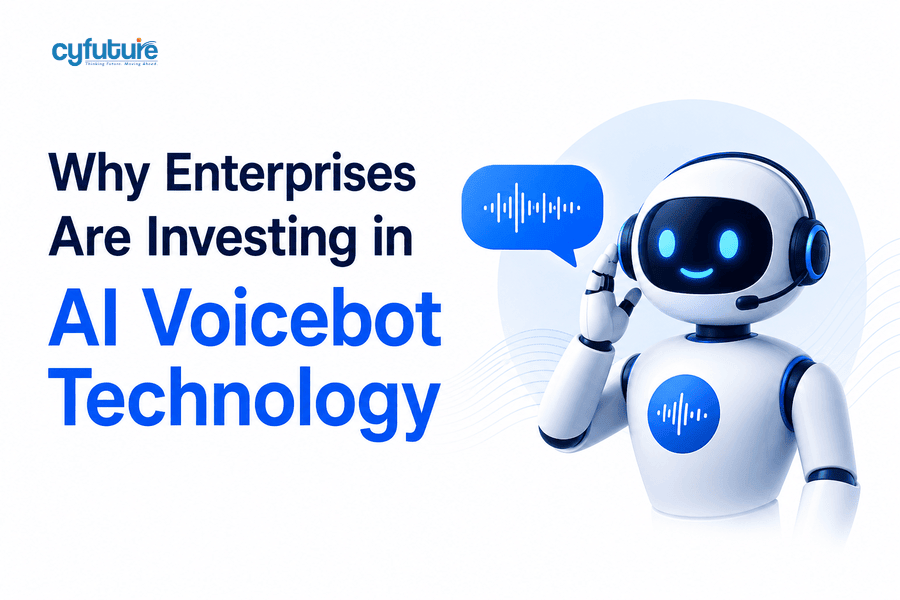
Artificial Intelligence (AI) has become a transformative force across industries, enabling businesses to automate operations, improve customer experiences, and optimize costs. Among the most impactful AI-powered innovations is AI voicebot technology. Enterprises worldwide are increasingly adopting AI voicebots to streamline customer interactions, enhance operational efficiency, and provide round-the-clock support.
As customer expectations continue to evolve, organizations are under pressure to deliver faster, more personalized, and seamless communication experiences. Traditional customer service models, dependent on human agents, often struggle to meet growing demands while maintaining cost efficiency. AI voicebots address these challenges by leveraging advanced technologies such as Natural Language Processing (NLP), Machine Learning (ML), speech recognition, and Generative AI to engage in human-like conversations.
This article explores the key reasons why enterprises are investing heavily in AI voicebot technology and how it is reshaping customer engagement and business operations.
An AI voicebot is an intelligent virtual assistant that interacts with users through spoken language. Unlike traditional Interactive Voice Response (IVR) systems that rely on rigid menu-based navigation, modern AI voicebots understand natural speech, interpret intent, and provide contextual responses.
Powered by advanced AI algorithms, voicebots can:
These capabilities make AI voicebots valuable assets for enterprises seeking scalable and efficient communication solutions.
The global digital transformation wave has accelerated enterprise adoption of AI-powered technologies. According to industry reports, businesses are increasingly investing in conversational AI solutions to improve customer experiences and reduce operational expenses.
Several factors are driving this trend:
AI voicebots offer a practical solution to address these challenges while enabling organizations to maintain competitive advantages.
Customer experience has become a major differentiator in today’s competitive business environment. Consumers expect quick, accurate, and personalized support whenever they interact with a company.
AI voicebots significantly improve customer experiences by:
Customers no longer need to wait in long call queues. Voicebots can instantly answer inquiries and resolve common issues.
Modern voicebots can access customer data and interaction history to provide tailored responses and recommendations.
Unlike human agents, voicebots maintain consistent communication standards across every interaction.
Global enterprises can use AI voicebots to communicate with customers in multiple languages, enhancing accessibility and inclusivity.
By delivering faster and more personalized service, enterprises can improve customer satisfaction and strengthen brand loyalty.
One of the primary reasons enterprises invest in AI voicebot technology is cost reduction.
Traditional customer support operations involve substantial expenses, including:
AI voicebots can automate a large percentage of routine customer interactions, significantly reducing the need for human intervention.
Many organizations report substantial reductions in customer service costs after implementing AI-powered voicebot solutions.
Modern customers expect support at any time, regardless of business hours.
Maintaining a 24/7 human support team can be expensive and difficult to manage. AI voicebots solve this challenge by offering uninterrupted service around the clock.
Benefits of continuous availability include:
For industries such as banking, healthcare, telecommunications, and e-commerce, 24/7 support has become a critical business requirement.
During peak periods, enterprises often struggle to manage large volumes of incoming calls.
Examples include:
AI voicebots can simultaneously handle thousands of conversations without compromising performance.
This scalability allows organizations to:
As customer demand fluctuates, AI voicebots provide enterprises with a flexible and scalable communication infrastructure.
AI voicebots do not replace human employees entirely. Instead, they complement human teams by handling repetitive and routine tasks.
Examples of automated tasks include:
By automating these activities, human agents can focus on more complex and high-value customer interactions.
This leads to:
Organizations benefit from a more efficient workforce and enhanced service delivery.
Recent advancements in Generative AI have significantly expanded the capabilities of AI voicebots.
Unlike traditional scripted systems, modern voicebots can:
Generative AI enables more human-like conversations, making interactions feel less robotic and more engaging. As AI-generated voices become increasingly realistic, businesses may also need tools to verify the authenticity of audio content. An AI voice detector can help identify whether speech has been generated or significantly modified using artificial intelligence. This can be particularly useful when organizations need to maintain transparency and distinguish between AI-generated and human-recorded voice content.
This advancement has encouraged enterprises to accelerate investments in conversational AI technologies to remain competitive in the digital era.
Digital transformation remains a top strategic priority for enterprises worldwide.
AI voicebots play a crucial role in helping organizations modernize customer engagement processes.
Voicebot adoption supports digital transformation by:
As enterprises seek to become more customer-centric and digitally mature, AI voicebots have emerged as a foundational technology.
Every customer interaction contains valuable information about preferences, behaviors, and expectations.
AI voicebots can automatically collect and analyze conversational data, providing enterprises with actionable insights.
Organizations can use this information to:
These insights enable businesses to make more informed decisions and continuously improve customer experiences.
AI voicebots are increasingly being used beyond customer support to drive revenue growth.
Sales-focused voicebots can:
By automating initial customer engagement, enterprises can accelerate sales cycles and improve conversion rates.
AI voicebots also ensure that potential customers receive immediate attention, reducing the likelihood of lost opportunities.
Today’s customers interact with businesses across multiple channels, including:
Modern AI voicebot solutions integrate seamlessly with omnichannel communication strategies.
This allows enterprises to deliver consistent experiences regardless of the communication channel used by the customer.
Unified customer interactions improve satisfaction while strengthening brand consistency.
Banks use AI voicebots for:
Healthcare providers leverage voicebots for:
Retail businesses use voicebots to:
Telecom companies deploy voicebots for:
Voicebots assist customers with:
While AI voicebots offer numerous benefits, enterprises should address several implementation challenges:
Organizations must ensure customer information is protected through robust security measures and compliance with regulations.
Voicebots should integrate smoothly with existing business systems, databases, and customer relationship management platforms.
AI models require ongoing optimization to maintain accuracy and effectiveness.
Complex situations may still require human intervention, making seamless agent handoff essential.
Addressing these factors helps maximize the return on investment from voicebot deployments.
The future of AI voicebots looks exceptionally promising. Advances in Generative AI, large language models, emotion detection, and real-time analytics will continue to improve conversational experiences.
Future voicebots are expected to:
As technology evolves, AI voicebots will become indispensable tools for customer engagement, operational efficiency, and business growth.
AI voicebot technology is rapidly becoming a strategic investment for enterprises seeking to improve customer experiences, reduce costs, and accelerate digital transformation. With the ability to provide 24/7 support, handle large call volumes, automate routine tasks, and generate valuable customer insights, AI voicebots deliver measurable business value across industries.
As Generative AI continues to enhance conversational capabilities, enterprises that embrace AI voicebot solutions today will be better positioned to meet future customer expectations and maintain a competitive edge. The growing adoption of AI voicebots reflects a broader shift toward intelligent automation, where businesses leverage advanced technologies to create more efficient, scalable, and customer-centric operations.
For organizations looking to modernize communication strategies and drive long-term growth, investing in AI voicebot technology is no longer an option—it is becoming a business necessity.
AI voicebot technology uses Artificial Intelligence, Natural Language Processing (NLP), and speech recognition to interact with users through natural voice conversations. Unlike traditional IVR systems, AI voicebots can understand intent, provide contextual responses, and automate customer interactions.
Enterprises are investing in AI voicebots to improve customer experience, reduce operational costs, provide 24/7 support, automate repetitive tasks, and increase business efficiency. AI voicebots help organizations scale customer service without significantly increasing costs.
AI voicebots provide instant responses, personalized interactions, multilingual support, and round-the-clock assistance. They reduce customer wait times and ensure consistent service quality across all interactions.
AI voicebots are designed to complement rather than replace human agents. They handle routine inquiries and repetitive tasks, while complex issues and sensitive interactions can be escalated to human representatives for resolution.
Industries such as banking, healthcare, telecommunications, retail, e-commerce, insurance, travel, and hospitality benefit significantly from AI voicebots due to their high customer interaction volumes and need for efficient support services.
Yes, AI voicebots can operate continuously without breaks, enabling businesses to provide customer support 24/7, including weekends and holidays.
AI voicebots automate common customer inquiries and service requests, reducing the workload on human agents. This helps lower staffing costs, training expenses, and overall customer service operational costs.
Modern AI voicebots are powered by technologies such as Artificial Intelligence (AI), Machine Learning (ML), Natural Language Processing (NLP), Automatic Speech Recognition (ASR), Text-to-Speech (TTS), and Generative AI.
Yes, AI voicebots can integrate with CRM platforms, helpdesk software, ERP systems, databases, and other enterprise applications to deliver personalized and efficient customer experiences.
The future of AI voicebot technology includes more human-like conversations, emotion recognition, multilingual capabilities, predictive customer support, and deeper integration with enterprise systems, making voicebots even more intelligent and effective.