424 Views
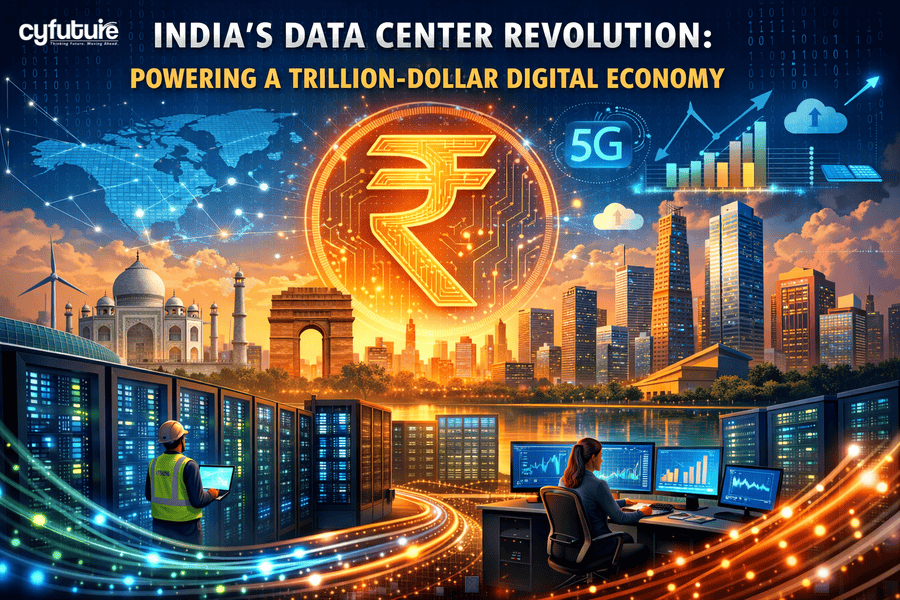
The landscape of India’s digital infrastructure is undergoing a seismic transformation, with the data center industry emerging as the undisputed backbone of the nation’s ambitious technological future. As the country races towards becoming a trillion-dollar digital economy, the demand for scalable, secure, and sustainable data storage and processing capabilities has driven an unprecedented surge in investment and capacity expansion. From accommodating the explosive growth of domestic data consumption to facilitating the advent of advanced technologies like Artificial Intelligence (AI) and 5G, the Indian data center market is at a critical inflection point, moving from a nascent stage to a powerhouse of critical digital infrastructure.
The Digital Tsunami: Drivers of Data Center Demand
The robust growth trajectory of the Indian data center market is fueled by a perfect storm of macro and micro-economic factors, all converging to create an insatiable appetite for computational and storage resources. Market reports highlight an exceptional absorption momentum, with total IT load capacity already standing at over 1,100 MW as of the first half of 2025, and projections indicating this capacity could nearly double to over 2,000 MW by 2027. This expansion requires billions of dollars in capital investment, underscoring the high-stakes nature of the sector.
1. The Digital Consumption Boom
At the heart of this growth is India’s massive digital consumption base. The country, with its rapidly growing internet penetration, is one of the world’s largest generators of data. Key consumption drivers include:
-
Hyperscale Cloud Adoption: Global and domestic hyperscale cloud providers are aggressively expanding their footprint to meet the growing enterprise and startup demand for Infrastructure-as-a-Service (IaaS) and Platform-as-a-Service (PaaS). The shift of Indian enterprises, with about 75% moving toward hybrid cloud environments, necessitates highly scalable and interconnected data center facilities.
-
AI and Machine Learning (AI/ML) Workloads: The Government of India’s aggressive ‘IndiaAI’ mission and the rapid development of generative AI applications are creating a specialized demand for high-performance computing (HPC) infrastructure. AI data centers require vastly different specifications, including higher rack density (over 30-40 KW/rack) and specialized cooling systems like liquid cooling, driving a new wave of design and infrastructure investment.
-
5G Rollout and Edge Computing: The nationwide deployment of 5G networks is fundamentally changing how data is processed, pushing the need for computation closer to the end-user. Edge computing, which involves deploying micro data centers in Tier II and Tier III cities, is a significant growth vector. This addresses the low-latency requirements of applications such as Industrial IoT, online gaming, autonomous vehicles, and real-time e-commerce. Capacity for edge computing is expected to double in the coming years.
-
Digitalization Across Sectors: Widespread digitalization across key sectors—including the Banking, Financial Services, and Insurance (BFSI) sector, healthcare, e-commerce, and the rise of Over-The-Top (OTT) streaming services and digital payment platforms like UPI—generates monumental volumes of data that require local processing and storage.
2. Regulatory and Policy Impetus
Government policies have played a pivotal role in creating a favorable environment for data center growth. The Ministry of Electronics and Information Technology (MeitY) proposed the Draft Data Center Policy, 2020, which is continually being revised to align with the AI era. Key policy developments include:
-
Infrastructure Status: Granting data centers ‘infrastructure status’ facilitates easier access to long-term credit and financing options, significantly improving the industry’s investment landscape.
-
Data Localization and Data Protection: Regulations, including the Digital Personal Data Protection Act (DPDP Act) and mandates from regulatory bodies like the RBI for sensitive data, require data residency within India’s borders. This is a primary driver for both international hyperscalers and domestic firms to establish and expand their data center operations within the country.
-
State-Level Incentives: Several state governments, recognizing the economic and digital leverage data centers provide, have introduced highly competitive policies. States like Maharashtra, Uttar Pradesh, Karnataka, and Tamil Nadu offer a suite of incentives such as subsidies on land costs, reduced electricity tariffs, stamp duty waivers, and most importantly, the implementation of single-window clearance systems to accelerate project approvals, which historically have been a major bottleneck.
The Competitive Landscape and Key Hubs
The Indian data center market is characterized by intense competition and significant capital commitment from a mix of global technology giants, major domestic conglomerates, and specialized data center operators.
Major Operators
The competitive field includes established players and new entrants backed by deep pockets:
-
Domestic Titans: Companies like Reliance Jio Data Centers, backed by India’s largest telecom operator, and Nxtra Data Limited (Bharti Airtel) leverage their vast fiber and telecom backbone to offer hyperscale-ready facilities. Yotta Data Services, a significant domestic operator, is also building multi-megawatt hyperscale campuses.
-
Global Leaders: International operators like STT GDC India, NTT Communications, and the AdaniConnex joint venture (between Adani Group and EdgeConneX) are heavily investing to expand their footprint. Hyperscale cloud providers such as Amazon Web Services (AWS), Google Cloud, and Microsoft Azure are also rapidly increasing their regional presence.
Geographic Hotspots
Data center development in India remains highly concentrated, driven by the proximity to international submarine cable landing stations, robust fiber connectivity, and established business ecosystems.
-
Mumbai Metropolitan Region (MMR): MMR continues to reign as the data center capital, commanding the largest share of total capacity. Its strategic location on the coast makes it the primary gateway for international connectivity.
-
Chennai: Located on the east coast, Chennai is a significant hub for its multiple cable landing stations, making it a critical location for content delivery networks and disaster recovery operations.
-
Emerging Hubs: Cities like Noida, Hyderabad, and Pune are rapidly emerging as secondary hubs, attracting large-scale investments due to supportive state policies, availability of land, and growing IT ecosystems. Hyderabad, for instance, is successfully integrating its strong IT sector into data center development.
The Challenge of Sustainability and Power
While the growth prospects are immense, the Indian data center industry faces considerable challenges, primarily related to infrastructure, cost, and talent.
Power and Green Energy Mandate
Data centers are notoriously energy-intensive, and this presents a dual challenge in India:
-
Reliable Power Supply: Despite India’s increasing power surplus, reliable, high-quality, and uninterrupted power supply remains a concern in many regions. Data center operators are forced to invest heavily in backup power systems, including diesel generators and high-capacity UPS, which significantly increases both capital expenditure and operational costs.
-
Sustainability: The environmental impact of massive energy consumption is a growing global concern, and India is no exception. Data centers are under pressure to adopt sustainable practices. The trend towards ‘Green Data Centers’ is strong, focusing on:
-
Renewable Energy Sourcing: Adopting Power Purchase Agreements (PPAs) for solar and wind energy and incorporating energy-efficient cooling solutions.
-
Energy Efficiency: Implementing efficient cooling technologies (e.g., liquid cooling for AI chips) and striving for a lower Power Usage Effectiveness (PUE) ratio.
-
Water Management: As data centers also require significant water for cooling, operators are focusing on water recycling and zero-liquid discharge systems.
Policy incentives are increasingly being linked to the adoption of green data center practices, encouraging a shift towards sustainable infrastructure.
Operational and Structural Hurdles
Beyond power, several operational and structural issues impact the speed and cost of deployment:
-
Real Estate and Approvals: The high cost of land and property in prime metropolitan areas, coupled with the complexity and multiplicity of obtaining necessary clearances (often requiring 30 or more approvals), can significantly delay project timelines. State-level single-window clearance mechanisms are intended to mitigate this, but implementation remains a work in progress.
-
Skill Gap: The industry requires highly specialized technical skills in areas like data center management, network security, cooling engineering, and AI infrastructure maintenance. A shortage of adequately trained professionals poses a challenge to the quality of service delivery and the rapid scaling of operations.
Future Outlook: The AI and Edge Frontier
The future of data centers in India will be inextricably linked to the trajectory of AI and edge computing. The market is not just expanding in size but also evolving in complexity and specialization.
The government is actively planning new incentive-based policies that move beyond simply encouraging the establishment of data centers, instead focusing on incentivizing computational output and advanced AI capabilities. This strategic shift aims to ensure that the infrastructure benefits start-ups and Small and Medium Enterprises (SMEs), further democratizing access to high-performance computing resources. The requirement for specialized GPU and TPU infrastructure to handle the massive, multi-lingual data generated in India will drive targeted investment in AI/ML-focused data centers.
Furthermore, the decentralization trend led by 5G and IoT will continue to push capacity towards Tier II and Tier III cities. This will require not only the deployment of micro-data centers but also significant corresponding investment in resilient fiber connectivity and local power infrastructure to support these facilities.
In conclusion, India’s data center industry stands at the threshold of a monumental growth phase. Driven by a billion-plus digital-first population, supportive governmental policies, and the disruptive power of AI and 5G, the market is poised to solidify India’s position as a global digital hub. The current phase is defined by massive capital injection, consolidation of key players, and an increasing focus on developing green, hyper-efficient, and AI-ready infrastructure. While challenges related to power reliability and regulatory streamlining persist, the overwhelming momentum of digital transformation ensures that data centers will remain the essential, beating heart of India’s economic and technological ascendance in the coming decades.
Related Posts in This Category