 135 Views
As AI workloads move from conventional machine learning to large language models, generative AI, multimodal systems, scientific computing, and high-performance inference, GPU infrastructure has become a major factor in both performance and cost. For businesses that do not want to purchase expensive hardware, GPU server rental provides access to high-end NVIDIA accelerators on an hourly, monthly, or reserved basis.
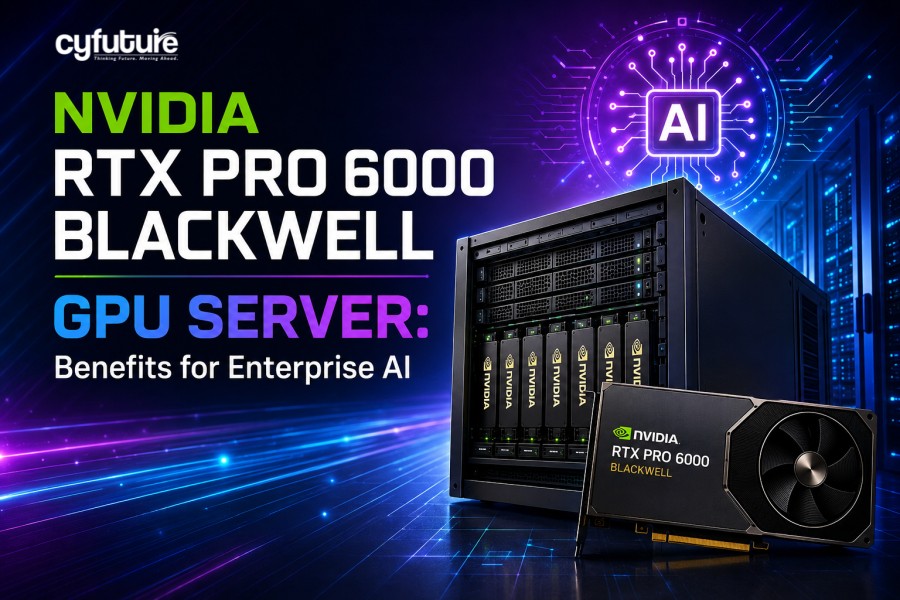
Two important NVIDIA GPU generations currently used for these workloads are Hopper and Blackwell. Hopper includes GPUs such as the NVIDIA H100 and H200, while Blackwell includes the B200 and B300. The right choice depends on model size, memory requirements, training or inference workload, networking requirements, availability, and rental economics.
NVIDIA Hopper was designed around large-scale AI and HPC workloads. The H100 introduced the Transformer Engine and FP8 acceleration, while the H200 expanded memory capacity and bandwidth while retaining the Hopper architecture. NVIDIA lists the H200 with 141GB of HBM3e memory and 4.8 TB/s of memory bandwidth, compared with the H100’s 80GB HBM3 memory.
Blackwell represents a newer GPU architecture designed for increasingly large AI models and inference workloads. The B200 provides substantially greater memory capacity than H100-class GPUs, while the B300/Blackwell Ultra generation pushes memory capacity and compute density further. NVIDIA’s current HGX specifications list 1.4TB total memory for an 8-GPU B200 system and 2.1TB for an 8-GPU B300 system.
For GPU server rental customers, this difference matters because memory capacity can determine whether a model fits on one GPU, requires multiple GPUs, or needs more complicated parallelisation.
The NVIDIA H100 remains an important option for AI infrastructure because of its combination of compute performance, mature software support, and widespread availability.
The H100 SXM configuration available through Cyfuture provides 80GB HBM3 memory, 3.35TB/s memory bandwidth and NVLink 4.0 connectivity. Cyfuture currently lists H100 rental configurations ranging from single-GPU systems to 8-GPU configurations.
H100 rental can be suitable for:
One advantage of renting H100 servers is that organisations can access this infrastructure without making a large upfront hardware investment.
The H200 addresses one of the important limitations of H100-class infrastructure: GPU memory capacity.
NVIDIA specifies 141GB of HBM3e memory and 4.8TB/s memory bandwidth for H200. This makes the H200 particularly relevant for memory-intensive LLM inference, large-context workloads and HPC applications.
For organisations already using Hopper-compatible software stacks, H200 can provide a relatively straightforward way to increase memory capacity without moving to an entirely different architecture.
Potential H200 rental workloads include:
The NVIDIA B200 belongs to the Blackwell generation and is designed for demanding AI training and inference.
NVIDIA’s HGX specifications show that an 8-GPU B200 platform provides 1.4TB of total GPU memory, with fifth-generation NVLink and up to 1.8TB/s GPU-to-GPU bandwidth.
The additional memory and newer architecture can be particularly useful when working with:
For GPU rental customers, B200 becomes interesting when the workload requires capabilities beyond what an H100/H200 deployment can economically provide.
The NVIDIA B300 represents the Blackwell Ultra generation.
NVIDIA’s current DGX B300 specifications show an 8-GPU configuration with 2.1TB total GPU memory, 144 PFLOPS of FP4 Tensor Core performance in sparse/dense specifications, and 14.4TB/s aggregate NVLink bandwidth.
Cyfuture describes its B300 offering with 288GB HBM3e per GPU and up to 8TB/s memory bandwidth, targeting large models, long context windows and high-performance AI infrastructure.
B300 can therefore be considered when GPU memory and inference efficiency are major infrastructure constraints.
The biggest difference is not simply that one generation is newer. The practical question is what your workload requires.
When comparing GPU server rental providers, businesses should avoid looking only at the advertised hourly GPU price.
Consider the complete infrastructure cost, including:
For example, Cyfuture currently publishes GPU-as-a-Service pricing with hourly and reserved options. Its published pricing page lists H100 configurations and B300 configurations, with pricing varying according to the number of GPUs and reservation period.
That means a simple H100 vs B200/B300 price-per-hour comparison may not accurately represent the total cost of running a production workload.
Buying high-end NVIDIA GPUs can make sense for organisations with predictable, long-term utilisation. However, the initial investment also includes servers, networking, power, cooling, rack space and ongoing maintenance.
GPU rental changes this financial model.
Instead of purchasing hardware, a company can:
This model can be especially useful for startups, AI development teams, research organisations and enterprises testing new models.
Cyfuture‘s infrastructure offering provides GPU-as-a-Service with NVIDIA GPU configurations for AI development, training and inference. Its current platform lists GPUs including H100, B200 and B300, alongside other NVIDIA accelerators.
Cyfuture also provides different rental models, including on-demand and reserved configurations. For example, its H100 platform currently lists single-, dual- and eight-GPU configurations.
For organisations evaluating GPU server rental, the important step is to match the GPU to the workload rather than automatically selecting the newest accelerator.
A practical selection process should begin with the workload.
For development and smaller AI models:
Consider lower-cost GPU options before moving to H100 or Blackwell.
For serious LLM training:
H100, H200, B200 or B300 may be appropriate depending on model size and training requirements.
For memory-intensive models:
H200 and Blackwell GPUs can provide considerably more memory capacity than H100.
For large-scale inference:
Benchmark actual tokens-per-second, latency, batch size and memory utilisation instead of relying only on theoretical specifications.
For distributed training:
Pay close attention to NVLink, networking bandwidth, GPU-to-GPU communication and multi-node architecture.
The H100 and H200 remain powerful Hopper GPUs, while B200 and B300 extend NVIDIA’s capabilities through the newer Blackwell generation. The move from Hopper to Blackwell can provide substantially greater memory capacity and newer AI acceleration capabilities, but the economic benefit depends on the workload.
For many organisations, GPU server rental is a practical way to test these architectures before committing to hardware ownership. Teams can benchmark H100, H200, B200 and B300 configurations using their actual models and then choose the infrastructure that provides the required performance, memory capacity and operating economics.
For current rental options, Cyfuture provides access to NVIDIA GPU infrastructure through its GPU-as-a-Service platform.
1. Is H100 still suitable for GPU server rental?
Yes. H100 remains a capable option for LLM training, fine-tuning, inference and HPC workloads, particularly when 80GB of GPU memory is sufficient.
2. What is the main advantage of H200 over H100?
The H200 provides substantially more GPU memory and memory bandwidth, with 141GB HBM3e and 4.8TB/s bandwidth according to NVIDIA.
3. What is the main difference between B200 and B300?
Both belong to the Blackwell family, but B300 is part of the newer Blackwell Ultra generation and provides greater memory capacity in NVIDIA’s HGX/DGX configurations.
4. Should I rent or buy an H100 or Blackwell GPU?
Rental can be useful when utilisation is variable, you are testing a workload, or you want to avoid upfront infrastructure investment. Long-term, highly predictable workloads may justify evaluating ownership economics.
5. Can I rent multiple GPUs for distributed AI training?
Yes. Multi-GPU configurations are available, and Cyfuture currently lists configurations including 2× and 8× H100 systems.
6. How should businesses compare GPU rental providers?
Compare the complete infrastructure package—including GPU memory, networking, storage, bandwidth, software, support, location and pricing—rather than comparing hourly GPU prices alone.