 246 Views
Businesses in India are increasingly looking for reliable, secure, and scalable infrastructure to run websites, applications, databases, enterprise software, AI workloads, and other digital services. While cloud computing and dedicated hosting remain popular, colocation server hosting in India offers another practical option for organisations that want greater control over physical hardware without building and maintaining their own data centre.
With colocation, businesses place their servers in a professional data centre and pay for infrastructure such as rack space, power, cooling, network connectivity, security, and technical support. This model can provide the advantages of enterprise-grade data centre infrastructure while allowing organisations to retain ownership and control of their hardware.
This guide explores the major features, benefits, costs, and considerations involved in choosing colocation server hosting in India.
Colocation server hosting is a service in which a business places its physical server equipment inside a third-party data centre. The customer generally owns or leases the server, while the data centre provider supplies the environment required to operate it.
A typical colocation facility provides:
Instead of investing in a private server room, businesses can use an established data centre’s infrastructure.
For example, a company may own several physical servers but lack the power, cooling, security, and network infrastructure needed to operate them reliably. Colocation allows the company to move those servers into a professional facility.
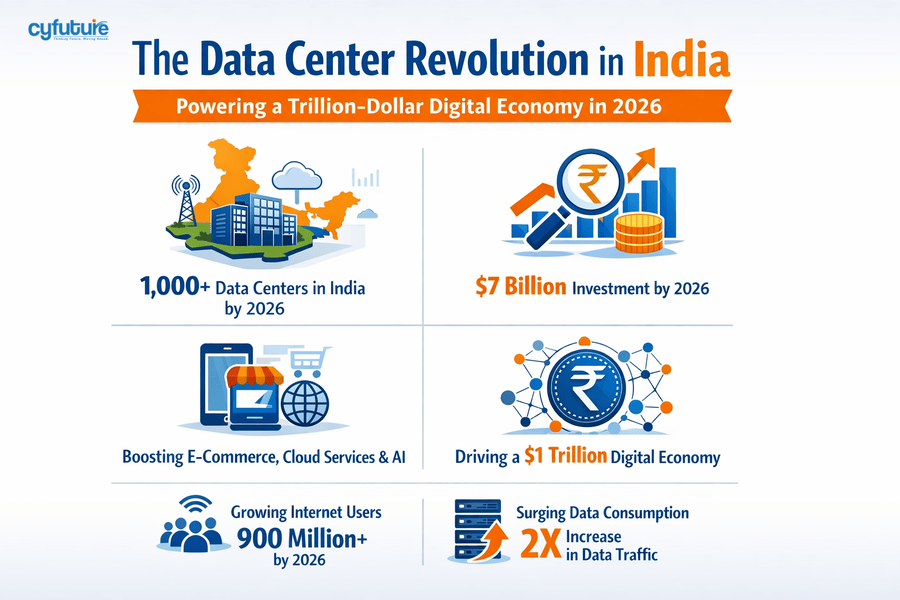
India’s digital economy continues to increase demand for data centre infrastructure. Businesses across e-commerce, financial services, SaaS, healthcare, media, manufacturing, IT, and artificial intelligence require dependable infrastructure to support digital applications.
Colocation can be particularly attractive to organisations that need:
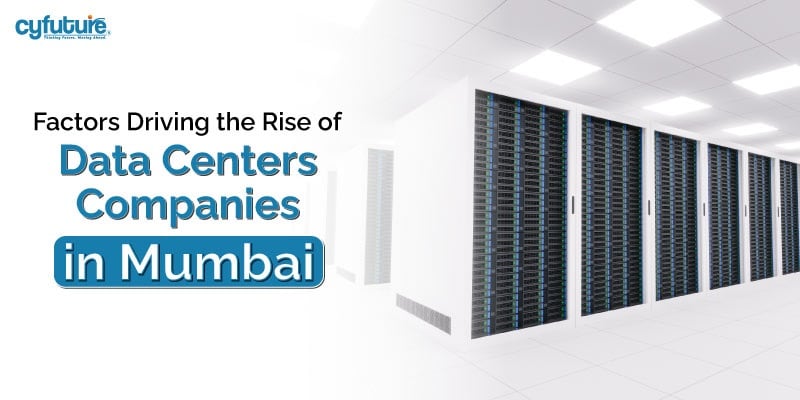
India also has several major data centre markets, including Mumbai, Delhi NCR, Noida, Bengaluru, Chennai, and Hyderabad.
Choosing the right location can help businesses improve connectivity to their users and simplify physical access to infrastructure.
Before selecting a provider, businesses should understand the infrastructure and services normally included in colocation.
Rack space is the physical area allocated to your server equipment.
Providers may offer:
The appropriate option depends on the number and size of servers you need to deploy.
Power availability is one of the most important features of a data centre.
Professional facilities may use UPS systems, generators, redundant power distribution, and monitoring systems to reduce the risk of power interruptions.
Businesses should check the available power capacity before deploying high-performance servers.
Servers continuously generate heat, making effective cooling essential.
A data centre should maintain appropriate environmental conditions through dedicated cooling infrastructure and monitoring.
This becomes especially important for high-density computing and GPU servers, which can generate substantially more heat than conventional systems.
Colocation providers generally connect servers to high-speed internet and data centre networks.
Depending on the provider, customers may have access to:
Businesses should select network capacity according to application traffic and future growth.
Security is another important feature of professional colocation facilities.
Common measures include:
These measures help protect physical infrastructure from unauthorised access.
Remote hands services allow data centre technicians to perform basic physical tasks on behalf of customers.
These may include:
This can be useful when a business’s IT team is located in another city or country.
Building a private data centre requires substantial investment in power systems, cooling, networking, physical security, fire protection, and maintenance.
Colocation eliminates the need to build most of this infrastructure independently.
Businesses pay for the infrastructure they use while the provider operates the facility.
Colocation gives businesses control over their physical servers.
Organisations can select:
This can be useful for workloads that require specialised hardware.
A professional data centre can provide infrastructure designed for high availability.
Redundant power, network connectivity, cooling, monitoring, and backup systems can help minimise infrastructure-related disruptions.
However, businesses should always evaluate the provider’s actual SLA and redundancy architecture rather than assuming every facility offers the same level of availability.
Colocation can provide a controlled physical environment for business-critical equipment.
Businesses benefit from professional facility security while retaining control over server-level security.
It is important to remember that colocation does not automatically secure the operating system or applications. Customers still need to manage firewalls, patches, access controls, backups, and cybersecurity.
Businesses can expand their infrastructure as their requirements grow.
For example, an organisation can begin with one or two servers and later move to a partial or full rack.
This can be easier than constructing additional infrastructure in an office environment.
Colocation can support demanding workloads such as:
For specialised workloads, businesses should verify that the facility supports the required power density, cooling, networking, and rack configuration.
One of the most important considerations is colocation server hosting cost in India.
There is no single fixed price because costs vary according to infrastructure requirements and provider policies.
Common pricing factors include:
The amount of physical space required directly affects pricing. A single 1U server generally requires less space than a full rack.
Power is a major cost factor, especially for high-performance servers and GPU systems.
Some providers include a specific power allocation in their plans, while others charge based on consumption or committed capacity.
Higher-bandwidth requirements can increase monthly costs.
Businesses should estimate expected traffic before selecting a plan.
Pricing can vary across cities and facilities due to differences in market demand, infrastructure, power costs, and connectivity.
Additional public IP addresses may involve separate charges depending on the provider.
Basic support may be included, while specialised technical work may be billed separately.
Businesses requiring connections to carriers, cloud providers, or other networks may incur additional cross-connect charges.
Longer contracts may offer different pricing structures compared with month-to-month arrangements.
Selecting the right provider requires more than comparing monthly prices.
Consider the following factors.
Ask about power redundancy, cooling architecture, backup generators, UPS systems, and network redundancy.
Check available carriers, bandwidth options, latency, BGP support, and network redundancy.
Review physical access controls, CCTV, monitoring, visitor policies, and security procedures.
Read the Service-Level Agreement carefully. Understand commitments relating to power, network availability, support, and incident response.
Check whether 24/7 support is available and what remote hands services are included.
Choose a provider that can accommodate additional servers, racks, power, and bandwidth as your business grows.
Select a data centre close to your target customers or operational requirements when latency and physical access are important.
Colocation and cloud hosting serve different infrastructure requirements.
With colocation, businesses typically control the physical server and rent data centre infrastructure.
With cloud hosting, infrastructure resources are generally provided as an on-demand service, offering flexibility and rapid provisioning.
Colocation may be preferable when an organisation requires specialised hardware, predictable physical resources, or direct hardware control.
Cloud hosting can be preferable when rapid scaling, automation, and flexible resource allocation are priorities.
Many organisations can also combine both approaches through a hybrid infrastructure strategy.
Colocation can be a strong option if your organisation:
It may be less suitable for businesses that need extremely rapid infrastructure provisioning or prefer fully managed infrastructure without responsibility for physical hardware.
Before moving equipment into a colocation facility, businesses should:
These steps can reduce unexpected costs and simplify ongoing management.
Colocation server hosting in India provides businesses with a practical way to operate physical servers inside professional data centre facilities without building their own data centre.
Its key advantages include dedicated hardware control, reliable power, professional cooling, network connectivity, physical security, scalability, and access to technical support.
However, the right solution depends on your workload, hardware, power requirements, bandwidth, location, security expectations, and budget. When comparing providers, businesses should evaluate the complete infrastructure and total cost of ownership rather than choosing a service based solely on monthly rack-space pricing.
For organisations that need dedicated physical infrastructure with professional data centre support, colocation can be a flexible and scalable infrastructure strategy.
Colocation server hosting allows businesses to place their physical servers in a professional Indian data centre. The provider supplies rack space, power, cooling, connectivity, security, and related infrastructure.
The cost depends on rack space, power consumption, bandwidth, IP addresses, data centre location, support, and contract terms. High-density servers generally require more power and specialised cooling.
Yes. Businesses can generally bring or lease their own compatible physical servers and install them in a provider’s data centre, subject to the facility’s technical and operational requirements.
A professional data centre can provide stronger physical security, redundant power, controlled access, environmental monitoring, and dedicated cooling compared with a typical office server room. However, customers remain responsible for server and application security.
Yes, provided the facility supports the server’s power density, cooling, rack configuration, and network requirements. Businesses should confirm these capabilities with the provider before deploying high-density GPU infrastructure.