 243 Views
As businesses continue to embrace digital transformation, the demand for secure, scalable, and high-performance IT infrastructure has never been greater. Whether you’re running cloud applications, managing enterprise databases, supporting AI workloads, or hosting customer-facing services, your infrastructure directly impacts business performance.
While many organizations have moved to the cloud, thousands still rely on physical servers for regulatory compliance, application performance, or hybrid IT strategies. Managing these servers in-house, however, comes with significant challenges, including rising energy costs, limited scalability, security concerns, and disaster recovery risks.
This is where data center colocation offers a practical solution.
Data center colocation allows businesses to place their privately owned servers and networking equipment in a professionally managed facility equipped with enterprise-grade power, cooling, connectivity, and physical security. Instead of investing millions in building and maintaining an in-house data center, organizations can leverage world-class infrastructure while maintaining complete control over their hardware.
According to industry research, the global colocation market continues to grow rapidly as enterprises adopt hybrid cloud, AI computing, edge computing, and digital-first business models. Organizations of all sizes are choosing colocation to improve uptime, reduce operational costs, and strengthen business continuity.
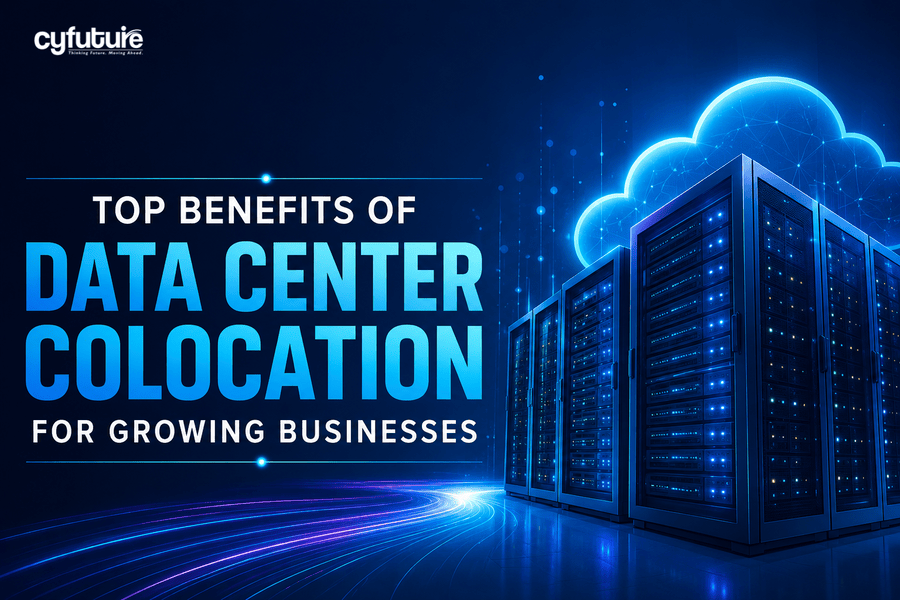
In this article, we’ll explore the top benefits of data center colocation for growing businesses and explain why it has become a strategic investment for modern enterprises.
Data center colocation is a service where businesses rent space within a third-party data center to house their servers, storage systems, networking equipment, and other IT infrastructure.
Unlike cloud hosting, where infrastructure is owned by the provider, colocation allows organizations to maintain ownership and control of their hardware while benefiting from enterprise-grade facilities.
Typical colocation services include:
This combination enables businesses to achieve data center-grade reliability without the expense of building their own facility.
Today’s businesses need Cloud infrastructure that supports rapid growth without increasing operational complexity.
Several market trends are driving colocation adoption:
As infrastructure requirements become more complex, organizations increasingly rely on professionally managed colocation facilities instead of expanding on-premises server rooms.
Building an enterprise-grade data center requires substantial capital investment.
Costs include:
Colocation converts these capital expenses into predictable operational costs.
Instead of investing heavily upfront, businesses simply pay for the rack space, power, and services they use.
This allows organizations to allocate more budget toward innovation and business growth.
Security is one of the biggest reasons businesses choose colocation.
Professional data centers implement multiple layers of physical protection, including:
These facilities also comply with internationally recognized standards such as:
Such security measures are difficult and expensive for most organizations to implement internally, which is why many organizations use a cloud NVR to simplify their video management.
Downtime can result in lost revenue, damaged reputation, and reduced customer trust.
Colocation facilities are designed for maximum uptime through:
Many enterprise colocation providers offer uptime guarantees of 99.99% or higher, helping businesses maintain uninterrupted operations.
Natural disasters, power failures, hardware issues, and cyberattacks can disrupt business operations.
Colocation facilities are designed to minimize these risks through:
Businesses can recover much faster compared to traditional server rooms.
Growing businesses rarely maintain the same infrastructure requirements year after year.
Colocation offers flexible scaling options, including:
This flexibility allows organizations to expand without relocating or rebuilding infrastructure.
Modern businesses require fast, reliable connectivity for customers, employees, partners, and cloud platforms.
Enterprise colocation facilities provide:
These capabilities improve application performance while reducing network bottlenecks.
Maintaining a data center requires specialized expertise.
Colocation providers manage:
Many providers also offer remote hands services, enabling technicians to replace hardware, reboot servers, or troubleshoot equipment without requiring your staff to visit the facility.
Businesses operating in healthcare, finance, government, and e-commerce must comply with strict regulatory requirements.
Professional colocation facilities help organizations meet compliance standards through:
This simplifies regulatory audits and reduces compliance risks.
Applications such as:
require consistent performance.
Colocation facilities deliver:
These factors improve application response times and overall user experience.
Running an internal data center demands continuous attention.
IT teams spend valuable time managing:
Colocation shifts infrastructure management to experienced providers, allowing internal teams to focus on strategic initiatives such as innovation, digital transformation, cybersecurity, and customer experience.
Recent industry research highlights the growing importance of colocation:
These trends indicate that colocation is becoming a strategic component of modern IT infrastructure rather than simply a space rental service.
Colocation is ideal for:
Any organization seeking secure, scalable, and reliable infrastructure can benefit from colocation services.
Before selecting a provider, evaluate the following:
Choosing the right provider ensures long-term reliability and operational efficiency.
As businesses continue to scale their digital operations, maintaining reliable IT infrastructure becomes increasingly challenging. Building and managing an in-house data center requires significant investment, specialized expertise, and ongoing operational costs.
Data center colocation provides an efficient alternative by combining enterprise-grade facilities with the flexibility of owning your own hardware. From enhanced security and high availability to disaster recovery, scalability, and superior connectivity, colocation enables organizations to improve performance while reducing infrastructure complexity.
Whether you’re expanding your digital services, supporting AI workloads, or implementing a hybrid cloud strategy, colocation can help your business achieve greater resilience, operational efficiency, and long-term growth.
Investing in the right colocation partner today can position your organization for future success in an increasingly connected and data-driven world.
Data center colocation is a service that allows businesses to house their own servers and IT equipment in a third-party data center with enterprise-grade power, cooling, security, and network connectivity.
Colocation helps growing businesses reduce infrastructure costs, improve uptime, enhance security, scale IT resources, and ensure business continuity without building an in-house data center.
In cloud hosting, the service provider owns and manages the hardware, while in colocation, businesses own their servers but rent secure space, power, cooling, and connectivity from a data center provider.
Yes. Modern colocation facilities provide enterprise-grade security features, including biometric access, 24/7 CCTV monitoring, fire suppression systems, redundant power, and compliance certifications such as ISO 27001 and SOC 2.
When selecting a colocation provider, consider factors such as uptime guarantees, security standards, network connectivity, scalability, disaster recovery capabilities, customer support, certifications, and data center location.