291 Views
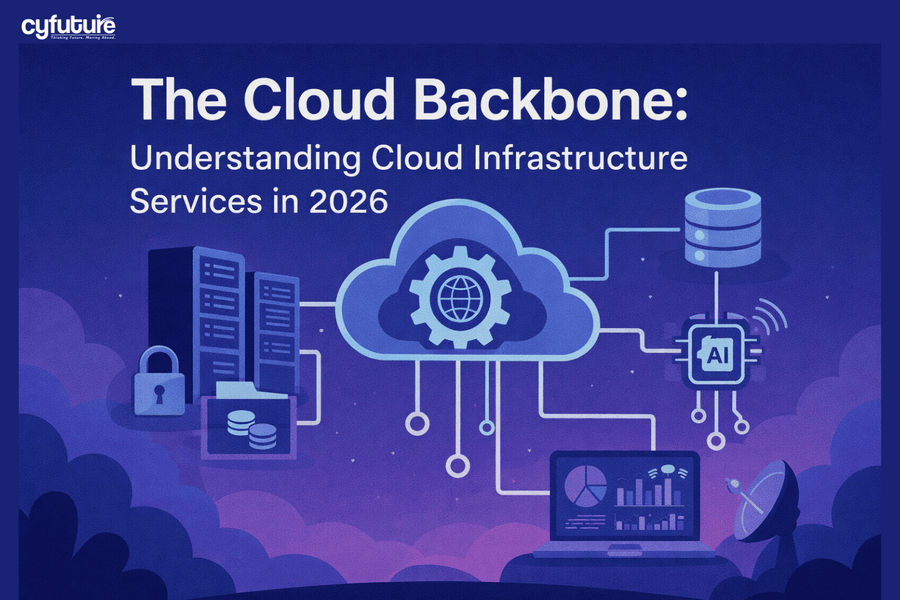
The digital economy runs on cloud infrastructure. It is no longer just a trend, but the essential backbone for nearly every modern application, from streaming your favorite show to managing global financial transactions. As we step into 2026, the landscape of Cloud Infrastructure Services is evolving faster than ever, driven by the relentless demands of Artificial Intelligence (AI), Edge Computing, and a universal need for agility and security.
This blog post will demystify the core components, unparalleled benefits, and strategic trends shaping the future of this foundational technology. Whether you’re a startup founder, an enterprise CIO, or a developer, understanding cloud infrastructure is crucial for navigating the next wave of digital transformation.
What Exactly are Cloud Infrastructure Services?
At its simplest, Cloud Infrastructure Services refer to the on-demand delivery of IT resources over the internet with pay-as-you-go pricing. Instead of owning and maintaining physical servers, storage, and networking hardware in your own data center (known as on-premises), you lease these resources from a third-party provider like Amazon Web Services (AWS), Microsoft Azure, or Google Cloud Platform (GCP).
These services abstract the underlying hardware, allowing businesses to focus on developing applications and delivering value, not on patching servers or managing air conditioning units.
The Essential Service Models
Cloud computing is typically categorized into three main service models, often visualized as a pyramid or a stack, illustrating the level of control and management a user maintains:
-
Infrastructure as a Service (IaaS):
-
What it is: The most fundamental layer. IaaS provides you with the basic building blocks of cloud IT, including virtualized compute resources (Virtual Machines), storage (block, file, and object), and networking (virtual private clouds, load balancers, etc.).
-
Your Control: You manage the operating system, middleware, and applications. The cloud provider manages the infrastructure.
-
Best for: Migrating existing applications, development and testing environments, and general-purpose workloads.
-
Examples: AWS EC2, Azure Virtual Machines, GCP Compute Engine.
-
Platform as a Service (PaaS):
-
What it is: PaaS builds on IaaS by adding a layer of an environment for developing, running, and managing applications. It provides everything needed to support the complete lifecycle of building and delivering web applications, including operating systems, programming language execution environments, databases, and web servers.
-
Your Control: You manage the applications and data. The cloud provider manages everything else, including the operating system and infrastructure.
-
Best for: Software developers and DevOps teams looking to rapidly build and deploy custom applications.
-
Examples: AWS Elastic Beanstalk, Azure App Service, GCP App Engine.
-
Software as a Service (SaaS):
-
What it is: The most comprehensive model, where the provider hosts and manages the entire software application. The user simply accesses the software over the internet, usually through a web browser.
-
Your Control: You only manage user access and configuration.
-
Best for: End-users and businesses needing specific software tools without worrying about hosting or maintenance.
-
Examples: Microsoft Office 365, Salesforce, Google Workspace.
The Transformative Benefits for Modern Business
The shift to cloud infrastructure services has been a monumental change agent. The advantages go far beyond simple cost reduction, driving fundamental changes in how businesses operate and compete.
1. Unmatched Scalability and Elasticity
The ability to scale resources up or down instantly is the cloud’s killer feature. With traditional on-premises infrastructure, you have to buy enough servers to handle your peak usage, meaning they sit idle most of the time (over-provisioning).
-
Elasticity means your infrastructure automatically grows to handle a Black Friday spike in e-commerce traffic and then shrinks back down to save costs when the demand subsides. This is crucial for businesses with unpredictable or seasonal workloads.
2. Significant Cost Optimization
Cloud infrastructure converts significant fixed expenses (buying hardware, data center space, cooling, power) into variable expenses.
-
The pay-as-you-go model means you only pay for the computing power, storage, and networking you actually consume. Furthermore, leveraging the massive economies of scale of the hyperscale providers (AWS, Azure, GCP) results in lower per-unit costs than maintaining your own small data center.
3. Increased Agility and Faster Time-to-Market
Developers can provision a new server, a complex database cluster, or a testing environment in minutes through a simple API call or web interface.
-
This agility accelerates the Development and Operations (DevOps) lifecycle, allowing organizations to test new ideas, deploy updates, and iterate on products much faster. Getting an idea from concept to customer is now a matter of weeks, not months.
4. Enterprise-Grade Security and Disaster Recovery
Top cloud providers invest billions in cybersecurity, employing world-class experts and implementing security measures far beyond the reach of most individual companies.
-
They offer built-in features like advanced encryption for data at rest and in transit, robust Identity and Access Management (IAM), and global data redundancy. For Disaster Recovery (DR), the ability to instantly replicate your systems across multiple geographic regions ensures business continuity in the face of localized outages or natural disasters.
The Hyperscale Cloud Titans of 2026
The cloud market is dominated by three main players, often called the Hyperscalers, which command the largest market share and offer the broadest, deepest suite of services:
| Provider |
Key Strengths & Focus Area |
| Amazon Web Services (AWS) |
The largest and most mature provider with the broadest service offering, deep developer tools, and a massive global footprint. Often chosen for proven performance and breadth of services. |
| Microsoft Azure |
Strong enterprise focus and seamless integration with existing Microsoft products (Windows Server, Office 365, etc.). Excellent for hybrid cloud strategies. |
| Google Cloud Platform (GCP) |
Excels in Data Analytics, Artificial Intelligence (AI), and Machine Learning (ML). Known for its developer-friendly tools, competitive pricing, and expertise in containerization (Kubernetes).
|
Beyond the Big Three, specialized players like Oracle Cloud Infrastructure (OCI), IBM Cloud, and Alibaba Cloud offer unique solutions, often catering to specific industries or compliance needs.
Strategic Trends Shaping Cloud Infrastructure in 2026
The cloud is a dynamic space, and several key trends are defining how businesses will consume and manage infrastructure over the next few years.
1. The Multi-Cloud and Hybrid Cloud Norm
The era of putting everything into a single cloud is receding. Businesses are increasingly adopting:
-
Multi-Cloud: Using services from multiple public cloud providers (e.g., AWS for IaaS, GCP for AI tools) to avoid vendor lock-in, leverage best-of-breed services, and improve resilience.
-
Hybrid Cloud: Combining on-premises infrastructure with one or more public clouds. This is crucial for industries with strict regulatory or data sovereignty requirements, allowing sensitive data to remain in-house while less-sensitive workloads run in the public cloud.
2. AI and ML Becoming Infrastructure Primitives
Artificial Intelligence is no longer just an application layer—it’s being integrated directly into the infrastructure itself.
-
Cloud providers are offering high-performance, specialized AI hardware (like custom chips and powerful GPUs) as a service. Furthermore, AI is being used by the cloud to optimize resource allocation, predict maintenance needs, and enhance security threat detection. Expect more AI-driven cloud services that automate complex tasks.
3. The Rise of Serverless and Function-as-a-Service (FaaS)
Serverless computing is the next evolution of abstraction, where the cloud provider manages virtually all of the infrastructure, including the underlying operating system and application scaling.
-
Developers only write and deploy their code (functions), and the cloud runs it, scaling instantly from zero to massive demand. This model further simplifies operations, reduces costs (by billing only for the exact execution time), and dramatically increases development speed.
-
Examples: AWS Lambda, Azure Functions, GCP Cloud Functions.
4. Edge Computing Gaining Traction
As IoT devices, autonomous vehicles, and real-time processing needs grow, there’s a requirement to process data closer to the source rather than sending everything back to a centralized cloud data center.
-
Edge Computing extends cloud infrastructure to locations outside traditional data centers—like factories, retail stores, or 5G towers. This minimizes latency (delay), which is critical for applications like industrial automation and real-time patient monitoring. Cloud providers are actively building edge frameworks to manage these distributed environments centrally.
5. Increased Focus on Cloud Security and Governance
As workloads become more complex and distributed across multi-cloud environments, security and governance are paramount.
-
Zero-Trust Architecture (where no user or device is trusted by default) is becoming the standard security model.
-
There’s a growing demand for Confidential Computing, which encrypts data even while it is being processed in memory, and tools for ensuring compliance with complex global regulations (like GDPR, HIPAA, etc.) across all cloud environments.
Navigating Your Cloud Infrastructure Journey
Adopting or optimizing your cloud infrastructure is a continuous journey that requires careful planning. Here are the critical steps for any organization:
1. Assess Your Workloads
Start by identifying which applications are best suited for the cloud. Not everything needs to be “lifted and shifted.” Some legacy systems may be better suited for a private or hybrid environment. Analyze your requirements for:
- Compute and storage needs
- Security and compliance mandates
- Budget constraints and cost optimization potential
- Integration needs with existing systems
2. Choose the Right Cloud Model
Decide on your strategy:
-
Public Cloud: For high scalability, fast development, and maximum cost savings (most common).
-
Hybrid Cloud: For integrating on-premises systems, meeting regulatory requirements, or gradual migration.
-
Multi-Cloud: For maximizing resilience and leveraging unique, specialized services from different providers.
3. Prioritize Security and Governance
Establish a strong Cloud Governance Framework from day one. This includes:
-
Implementing Identity and Access Management (IAM) policies rigorously.
- Automating security checks and compliance enforcement using cloud-native tools.
-
Investing in training for your teams to understand the shared responsibility model—the provider secures the cloud infrastructure, but the customer is responsible for securing their data and applications in the cloud.
4. Embrace Cloud-Native Technologies
To truly realize the benefits of the cloud, adopt modern, cloud-native practices:
-
Use Containers (like Docker) and Orchestration (like Kubernetes) for consistent and scalable deployments.
-
Adopt Serverless architectures for new application development to minimize operational overhead.
-
Implement robust DevOps and CI/CD (Continuous Integration/Continuous Delivery) pipelines to automate the delivery of code.
Conclusion: The Platform for Innovation
Cloud Infrastructure Services have fundamentally changed the economics and capabilities of modern IT. They offer an unprecedented level of elasticity, cost-efficiency, and global reach, transforming what was once a technical bottleneck into a powerful platform for business innovation.
In 2026, the conversation is shifting from whether to use the cloud to how to use its advanced features—AI, Serverless, Edge Computing, and Multi-Cloud—to gain a competitive edge. By understanding these core concepts and embracing the evolving trends, your business can harness the full, limitless potential of the cloud to build smarter, scale faster, and thrive in the digital age.
Related Posts in This Category