 368 Views
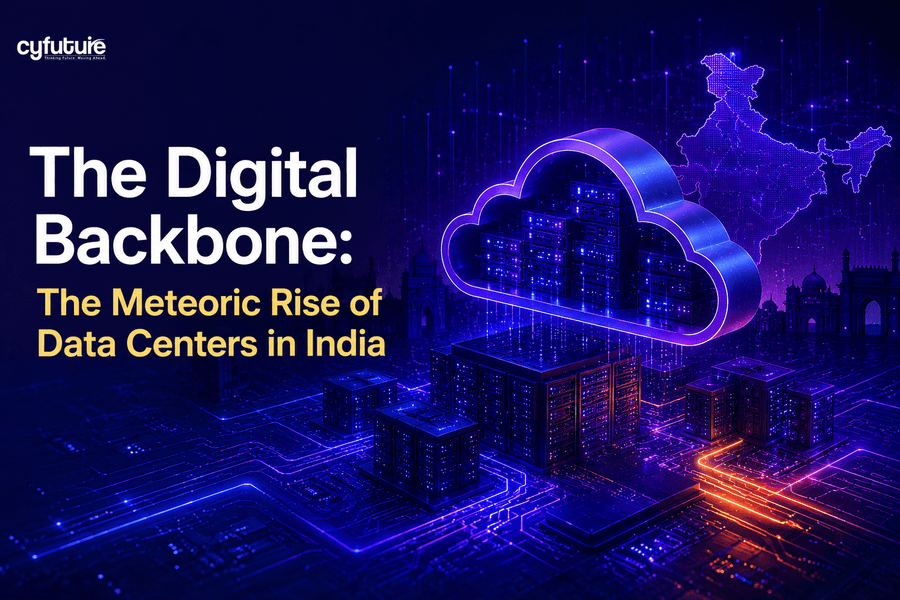
The landscape of India’s digital economy is undergoing a structural shift. As of 2026, the nation has transitioned from being a mere consumer of global digital services to becoming a primary hub for the infrastructure that powers them. Data centers, once relegated to the background of IT discussions, have emerged as the “factories of the 21st century,” serving as the essential infrastructure for everything from UPI transactions and e-commerce to the complex processing requirements of Generative AI.
This transformation is not accidental. It is the result of a convergence of aggressive government policy, a massive surge in data consumption, and the arrival of high-density technologies like 5G and Artificial Intelligence. With the total data center capacity in India projected to exceed $2000\text{ MW}$ by the end of 2026, the sector is no longer just growing; it is exploding.
The Indian data center market has entered a phase of hyper-growth. Recent industry reports indicate that the sector is expected to grow at a Compound Annual Growth Rate (CAGR) of approximately $15.8\%$ between 2026 and 2033. By 2033, the market revenue is projected to reach a staggering $\$45.7\text{ billion}$.
Several factors are fueling this momentum:
The year 2026 marks a turning point for policy certainty in the industry. The Union Budget 2026-27 introduced landmark incentives that have effectively “de-risked” long-term investments for global players.
Perhaps the most significant announcement is the long-horizon tax exemption for foreign companies providing global cloud services from Indian-based data centers. Valid until March 31, 2047, this policy aims to position India as a global export hub for compute power. By providing a 20-year window of stability, the government is addressing the “long-gestation” nature of data center assets, which typically have operational lives of 20 to 30 years.
To reduce litigation and transfer pricing friction, the government introduced a $15\%$ safe harbor on costs for related-party data center services. This move provides the financial predictability that multinational corporations require when deciding where to anchor their regional infrastructure.
While the data center boom is a national phenomenon, it is concentrated in strategic clusters that offer the best combination of power stability, fiber connectivity, and proximity to landing stations for undersea cables.
| City | Market Share (Approx.) | Key Strength |
| Mumbai/Navi Mumbai | $44\%$ | Landing station for majority of undersea cables; financial capital proximity. |
| Bengaluru | $25\%$ | Silicon Valley of India; massive concentration of IT and R&D talent. |
| Delhi-NCR (Noida) | $11\%$ | Primary hub for North India; government and public sector digitization. |
| Chennai | $8\%$ | Secondary undersea cable hub; emerging as a rival to Mumbai for coastal connectivity. |
| Hyderabad | Emerging | Progressive state incentives; significant land parcels for hyperscalers. |
Mumbai remains the undisputed leader, largely due to its connectivity. However, cities like Noida and Hyderabad are seeing rapid expansion as operators seek to diversify geographically to ensure lower latency for users across the subcontinent.
The demand for data centers in 2026 is no longer just about storage; it is about “compute density.” The rollout of 5G has created a data deluge from IoT devices, smart cities, and autonomous systems. This data must be processed in real-time, leading to the rise of Edge Data Centers—smaller facilities located closer to the end-user to minimize latency.
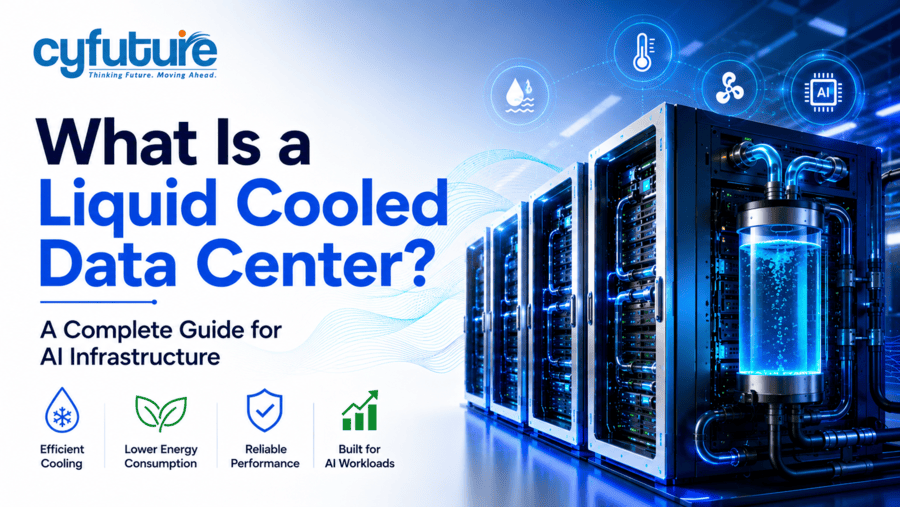
Simultaneously, the rise of Generative AI has forced a redesign of data center architecture. Traditional cooling methods are often insufficient for the heat generated by the massive GPU clusters required for AI training. Consequently, 2026 has seen a surge in the adoption of:
As data centers consume a rising share of the national electricity grid—projected to reach $6\%$ by 2030—sustainability has moved from a corporate social responsibility (CSR) goal to a business necessity.
Leading operators like STT GDC India and AdaniConneX are aiming for carbon-neutral operations by 2030. This is being achieved through:
Despite the bullish outlook, the path to becoming a global hub is not without hurdles.
Data centers require massive amounts of continuous power and water. In many Indian metros, the aging grid infrastructure struggles to keep pace with the $100\text{ MW}+$ requirements of new hyperscale campuses. Delays in “power evacuation” and land acquisition remain common pain points.
Experts warn that by centralizing the nation’s data, India is creating “high-value honeypots” for state-sponsored hackers. Research from early 2026 indicates that nearly $29\%$ of global cyber incidents now involve cloud systems. As the infrastructure grows, the security “guardrails” must be strengthened at the same pace.
Operating a modern, AI-ready data center requires specialized skills in thermal management, high-voltage electrical engineering, and advanced network security. There is a growing need for a workforce that understands both traditional infrastructure and modern cloud-native architecture.
Data centers are expanding quickly in India due to increasing internet usage, cloud computing adoption, digital transformation, AI technologies, and rising demand for secure data storage from businesses and government sectors.
Data centers act as the backbone of the digital economy by storing, processing, and managing large volumes of data for industries such as banking, healthcare, e-commerce, telecom, and IT services.
Key drivers include the growth of 5G networks, government digital initiatives, data localization regulations, booming OTT platforms, and increasing demand for cloud and AI-based services.
Cities like Mumbai, Chennai, Hyderabad, Bengaluru, Pune, and Noida are becoming leading data center hubs because of strong connectivity, reliable power infrastructure, and business-friendly environments.
The future of India’s data center industry looks highly promising, with rising investments in hyperscale facilities, green data centers, edge computing, and AI-driven infrastructure to meet growing digital demands.
India is no longer just a “back-office” for the world; it is becoming the world’s digital engine room. The combination of a massive domestic market and a favorable regulatory environment has created a “perfect storm” for the data center industry.
As we move through 2026, expect to see the “tier-2” cities like Pune, Kochi, and Kolkata join the ranks of major hubs as edge computing takes hold. The focus will shift from building “more” capacity to building “smarter” and “greener” capacity. For investors and enterprises, the message is clear: the data center sector is the most critical asset class in India’s modern real estate and technology landscape.