 234 Views
In today’s fast-paced world, businesses need to stay connected and efficient. Whether you’re a small start-up or a large corporation, one of the most important decisions you’ll face is how to manage and store your data. This is where cloud server solutions come into play. In this blog post, we’ll explore what cloud servers are, how they work, and why they’re so beneficial for businesses of all sizes.
Let’s start with the basics. A cloud server is a virtual server that runs in a cloud computing environment. Unlike traditional physical servers, which are stored in a specific location like a data center or office, cloud servers exist on the internet, hosted by a cloud service provider like Amazon Web Services (AWS), Microsoft Azure, or Google Cloud.
Imagine a cloud server like a powerful computer that’s located somewhere in the world, but instead of being physically in your office, it’s in a remote data center. You can access it anytime, from anywhere, as long as you have an internet connection.
Cloud servers work by running on virtual machines (VMs). These VMs are like small, self-contained computers that run independently but share the resources of a larger, physical machine. The cloud service provider owns and manages the physical hardware, while businesses rent access to the virtual servers.
Here’s a simple breakdown of how a cloud server operates:
Now that we understand what cloud servers are, let’s dive into the reasons why cloud server solutions are a great choice for businesses.
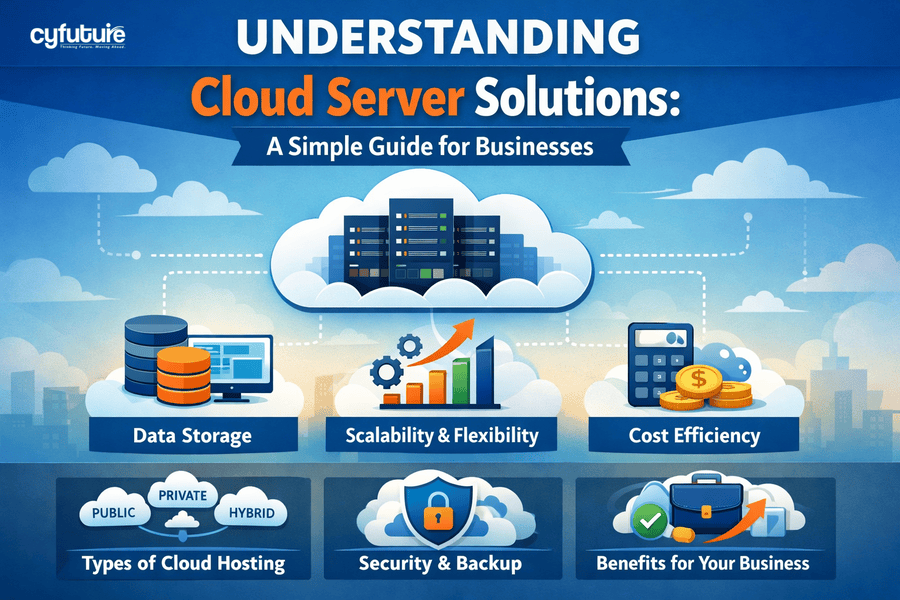
One of the biggest advantages of cloud servers is cost savings. Traditional servers can be expensive to set up and maintain. You need to buy physical hardware, pay for electricity, and hire IT staff to maintain the equipment. With cloud servers, you don’t need to worry about buying hardware or maintaining it. You only pay for the resources you use, which can be much cheaper in the long run.
Imagine you run a small business that only needs a few gigabytes of storage. Instead of buying an expensive server, you can rent exactly what you need from a cloud service provider, saving both money and space.
As your business grows, so do your data needs. Cloud servers offer incredible scalability. Whether your business experiences a sudden spike in traffic or you’re growing your data storage, cloud servers can easily adapt. You can quickly add or reduce resources, ensuring that you only pay for what you use.
For example, if your website gets a lot of traffic during a seasonal promotion, you can increase your cloud server resources for a few weeks and then scale them back down when the promotion ends. This flexibility is hard to achieve with traditional physical servers.
When it comes to business operations, downtime can be costly. If your website or application goes offline, it can lead to lost sales, customer frustration, and a damaged reputation. Cloud server solutions offer high availability, meaning your data is stored across multiple data centers, ensuring that if one server goes down, your information is still accessible from another server.
Cloud service providers typically offer Service Level Agreements (SLAs), which guarantee a certain level of uptime. Most providers offer 99.9% uptime, meaning your business will experience very little downtime.
Data security is a top concern for businesses, especially when sensitive information is involved. Cloud server providers understand this and offer advanced security features to protect your data. These features may include:
By using a cloud server, businesses can benefit from the security measures provided by large providers, which may be more advanced than what a small business could afford on its own.
Cloud servers are designed to be accessed from anywhere, which makes them ideal for businesses with remote teams. Employees can access business data, applications, and services from home, while traveling, or in the office. All they need is an internet connection.
This flexibility is essential in today’s work environment, where remote work is becoming more common. Whether your team is spread across the globe or you just need to work from home for the day, cloud servers make it easy to stay connected.
One of the headaches of managing physical servers is the constant need for updates and maintenance. Software patches, hardware fixes, and security updates require time and attention. With cloud servers, most of these tasks are handled by the cloud provider. They take care of the hardware maintenance, software updates, and security patches, so you don’t have to.
This reduces the burden on your internal IT team, allowing them to focus on more important tasks that drive your business forward.
Cloud computing is also more environmentally friendly than traditional server setups. By using cloud servers, businesses can take advantage of the energy efficiency of large-scale data centers, which are designed to be much more energy-efficient than individual servers.
Many cloud providers also use renewable energy sources to power their data centers, helping businesses reduce their carbon footprint.
There are several types of cloud server solutions that businesses can choose from, depending on their needs.
In a public cloud, the cloud service provider owns and manages the infrastructure. Businesses rent virtual servers from the provider, and resources are shared with other businesses. This is the most common and cost-effective type of cloud server, ideal for small to medium-sized businesses.
A private cloud is dedicated to a single business. It offers more control and security, making it suitable for larger organizations or businesses with strict security requirements. In a private cloud, the business owns the hardware and can choose to either manage the infrastructure in-house or outsource it to a third-party provider.
A hybrid cloud is a combination of both public and private cloud solutions. Businesses can store sensitive data in a private cloud while using the public cloud for less-critical applications. This provides the flexibility of both worlds.
Choosing the right cloud server solution depends on several factors:
Cloud server solutions are virtual servers hosted on the internet instead of physical hardware in your office. They allow businesses to store data, run applications, and access resources online with flexibility, scalability, and lower upfront costs.
Cloud servers help businesses reduce IT costs, scale resources as needed, improve data security, and enable remote access. They also eliminate the need to maintain physical servers, saving time and operational effort.
Yes, cloud servers are highly secure when managed properly. Most providers offer advanced security features such as encryption, firewalls, regular backups, and compliance with industry standards to protect business data.
Traditional servers are physical machines located on-site, requiring maintenance and upfront investment. Cloud servers are virtual, hosted in data centers, and can be easily scaled, upgraded, or paid for on a usage basis.
Businesses should consider factors such as workload requirements, budget, scalability needs, security features, and support services. Choosing a solution aligned with business goals ensures better performance and long-term value.
Cloud server solutions are transforming how businesses operate by offering cost-effective, scalable, and secure ways to manage data. Whether you’re a small business looking to cut costs or a large company in need of advanced security, cloud servers provide the flexibility to meet your needs. By understanding the basics of cloud servers and the benefits they offer, you can make an informed decision that will support your business growth for years to come.
As cloud technology continues to evolve, its role in business operations will only grow stronger. So, if you haven’t already, it might be time to start exploring how a cloud server solution can benefit your business.