 197 Views
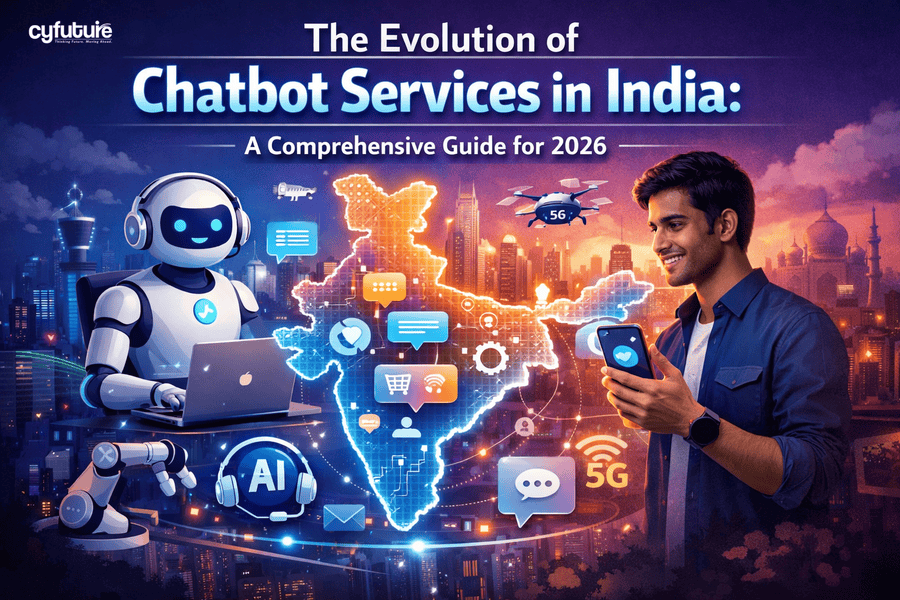
The Indian digital landscape has undergone a tectonic shift over the last decade. From the rapid adoption of 5G to the democratization of data, India has moved from being a participant in the global tech race to a leader in implementation. At the heart of this transformation lies the “conversational interface.” Chatbot services, once viewed as simple automated responders, have now evolved into sophisticated, AI-driven business partners that drive revenue, ensure compliance, and bridge the linguistic divide of a billion people.
As we move through 2026, the demand for intelligent chatbot services in India is no longer restricted to tech giants. Small and Medium Enterprises (SMEs) in Tier 2 and Tier 3 cities are now leveraging these tools to scale operations without exponentially increasing their headcount.
The Indian chatbot market is projected to grow at a Compound Annual Growth Rate (CAGR) of over 23% between 2025 and 2030. This growth is fueled by a unique “mobile-first” and “voice-first” user base. In India, the chatbot is not just a widget on a website; it is the primary bridge between a brand and a consumer who might be more comfortable speaking in Marathi than typing in English.
One of the most significant developments for the Indian market in 2026 is the integration of the government’s Bhashini AI stack into commercial chatbot services. India is home to 22 official languages and thousands of dialects. Modern chatbot services now offer:
In India, WhatsApp is not just a messaging app; it is the internet. Chatbot services have pivoted to become “WhatsApp-first.” Businesses are now running entire storefronts—from product discovery to final payment via UPI—directly within the chat window. This “Conversational Commerce” model has reduced cart abandonment rates by nearly 40% compared to traditional mobile apps.
Every sector in India has unique pain points that AI chatbots are solving. Here is how specialized services are making an impact:
The Indian banking sector was an early adopter of chatbot technology. By 2026, bots like HDFC’s EVA or ICICI’s iPal have moved beyond answering “What is my balance?”
With the rise of 10-minute delivery services in Indian metros, speed is the only currency.
Chatbots in Indian healthcare are acting as the first line of defense.
To be effective in the 2026 Indian market, a chatbot service must be built on three specific technological pillars:
Traditional rule-based chatbots (if-this-then-that) are being replaced by Large Language Models (LLMs) like GPT-4, Llama 3, and India-specific models like BharatGPT. These bots understand intent, sentiment, and context. They do not get confused by a user’s slang or typos; they interpret the “vibe” of the conversation to provide helpful, human-like responses.
A chatbot is only as good as the data it can access. Premium chatbot services in India now offer deep integration with:
The Indian consumer journey is fragmented. A user might discover a product on Instagram, ask a question on the website, and want the final invoice on WhatsApp. Leading service providers ensure a “single pane of glass” view, where the context of the conversation follows the user across all platforms.
As of 2026, the Digital Personal Data Protection (DPDP) Act 2023 is in full force. For any business implementing chatbot services in India, compliance is no longer optional.
Chatbots must now explicitly ask for consent before collecting any personal data (Phone numbers, Aadhaar details, etc.). This consent must be “free, specific, informed, and unambiguous.” Modern chatbot platforms provide built-in consent managers that log these permissions to protect the business from heavy penalties.
The Indian government has strict guidelines regarding where the personal data of its citizens can be stored. Top-tier chatbot service providers now offer “Sovereign Cloud” options, ensuring that all chat logs and user data remain within Indian borders, mitigating legal risks for enterprises.
Users now have the right to ask a bot to “forget” them. Chatbot services must have automated workflows to purge a user’s data from their systems upon request, ensuring the business remains compliant with the “Right to be Forgotten.”
When selecting a partner to build or deploy your chatbot, Indian businesses should evaluate candidates based on the following criteria:
Does the provider use generic translation or native Indic-NLP? The difference determines whether your bot feels like a helpful local assistant or a robotic foreigner. Look for providers that have demonstrated success with the 22 scheduled languages of India.
For most SMEs, hiring a dedicated team of AI engineers is not feasible. The best service providers offer drag-and-drop builders that allow a marketing or operations manager to update the bot’s logic in real-time without writing a single line of code.
No AI is perfect. A critical feature is the ability for the bot to recognize when a customer is frustrated or has a complex query and “hand off” the conversation to a human agent seamlessly. The transition should be invisible to the customer, with the agent receiving the full transcript of the bot’s interaction to avoid asking the customer to repeat themselves.
India’s “Flash Sales” and festive seasons can cause traffic spikes of 100x. Your chatbot service must be hosted on a robust infrastructure that can handle millions of concurrent sessions without lagging.
The next frontier for chatbot services in India is Predictive Conversational AI. We are moving away from reactive bots (that wait for a user to ask a question) to proactive bots.
Imagine a chatbot for a retail brand that knows a customer’s gas cylinder is about to run out or their insurance policy is due for renewal based on past data. The bot will initiate a conversation: “Namaste Rahul, your car insurance expires in 3 days. Would you like me to renew it now using your saved UPI ID?” This level of hyper-personalization, combined with the security of the DPDP Act and the reach of the India-AI mission, will define the next decade of business growth in the subcontinent.
Chatbot services have moved from being a “good-to-have” digital accessory to a core operational necessity for the Indian market. Whether it is navigating the linguistic diversity of our states, integrating with the world-class UPI ecosystem, or ensuring data privacy for 1.4 billion people, these AI-driven tools are the silent engines of the New India.
For businesses looking to stay competitive in 2026, the question is no longer if they should implement a chatbot, but how fast they can deploy one that is multilingual, compliant, and truly conversational.
Chatbot services in India have evolved from basic rule-based bots to advanced AI-powered conversational systems. Early chatbots relied on predefined scripts, but modern solutions now use Natural Language Processing (NLP), Machine Learning (ML), and Generative AI to deliver human-like conversations. In 2026, Indian businesses are increasingly adopting AI-driven chatbots for customer support, sales automation, fintech services, healthcare assistance, and eCommerce personalization.
In 2026, industries such as banking, fintech, healthcare, education, retail, and telecom are leading chatbot adoption in India. BFSI companies use chatbots for instant customer queries and fraud detection, while eCommerce platforms deploy AI bots for personalized recommendations and order tracking. Government and public service sectors are also implementing chatbots for citizen engagement and grievance redressal.
The growth of chatbot services in India is powered by technologies like Artificial Intelligence (AI), Natural Language Processing (NLP), Machine Learning (ML), Large Language Models (LLMs), and cloud computing. Integration with messaging platforms such as WhatsApp, web portals, and mobile apps has also accelerated adoption. Additionally, multilingual AI support is playing a major role in reaching India’s diverse population.
Chatbot services offer several benefits, including 24/7 customer support, reduced operational costs, faster response times, improved lead generation, and enhanced customer experience. AI chatbots can handle thousands of simultaneous queries, automate repetitive tasks, and provide data-driven insights that help businesses optimize marketing and service strategies.
Beyond 2026, chatbot services in India are expected to become more conversational, emotionally intelligent, and voice-enabled. Hyper-personalization, AI-driven automation, predictive analytics, and deeper integration with CRM and ERP systems will shape the next phase of growth. As AI regulations mature, secure and ethical chatbot deployment will also become a major focus for enterprises.