1413 Views
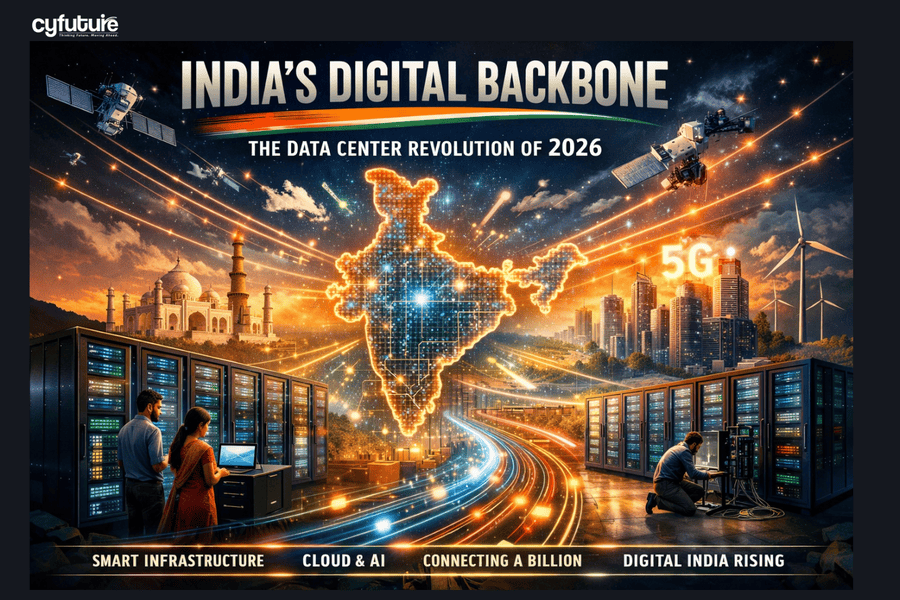
India is on the cusp of a digital infrastructure supercycle. The year 2025 marks a pivotal moment where the fusion of government vision, immense foreign investment, and an explosion in data-intensive technologies like Artificial Intelligence (AI) is fundamentally reshaping the nation’s data center landscape. These physical centers of data processing are no longer mere utilities; they are the bedrock upon which the nation’s $1 trillion digital economy target is being built. The confluence of accelerated 5G rollout, soaring cloud adoption, and strategic data localization policies has turned India into one of the world’s most dynamic and high-potential markets for digital infrastructure. The country is moving rapidly from an emerging market for data centers to a global powerhouse.
The Tectonic Shift: Drivers of Exponential Growth
India’s data center market is experiencing an unprecedented boom, with installed capacity projected to grow significantly, potentially hitting over 4.5 GW by 2030 from an estimated 1.3 GW in early 2025. This dramatic expansion is fueled by a perfect storm of structural and technological drivers.
1. The AI and Hyperscale Compute Catalyst
The single most significant force reshaping the sector is the explosive demand for AI-ready compute capacity. The emergence of Generative AI has necessitated a complete rethinking of data center design.
-
Extreme Density: AI workloads, particularly for training large language models, require specialized hardware like high-density GPUs and AI accelerators. These new racks consume significantly more power—up to 300% more than their predecessors—pushing average rack densities from a traditional 8-10 kW to over 30-40 kW per rack.
-
The Cooling Revolution: To manage this extreme heat load, operators are rapidly pivoting from traditional air cooling to advanced hybrid liquid cooling solutions—including rear door heat exchangers and direct-to-chip loops. Facilities purpose-built for these densities are commanding premium uptake in major hubs.
-
Hyperscale Commitment: Global hyperscalers (like Amazon, Microsoft, and Google) and their Indian partners are making multi-billion-dollar investments. Notably, the joint venture between Tata Consultancy Services (TCS) and TPG to create gigawatt-scale, AI-ready data centers, as well as the AdaniConneX and Google partnership, signal a long-term commitment to building sovereign, massive-scale infrastructure to meet the AI wave.
2. Digitalization and the 5G/Cloud Push
India’s digital consumption continues its relentless climb, driven by the world’s largest digital population.
-
Cloud Foundation: Cloud computing remains the foundation of digital transformation, with over 90% of organizations utilizing the cloud. Data centers, in turn, are the foundation of cloud services. This continuous migration from on-premise infrastructure to hybrid and multi-cloud environments sustains high demand for colocation and hyperscale capacity.
-
5G and Edge Computing: The near-pan-India rollout of 5G is not just about faster mobile speeds; it’s enabling a host of latency-sensitive applications like autonomous vehicles, smart factories, real-time analytics, and sophisticated IoT deployments. This necessity for low latency is driving the architecture of the “Neo Cloud” paradigm—pushing computing closer to the end-user via smaller, distributed Edge Data Centers in Tier 2 and Tier 3 cities.
3. Favorable Regulatory and Policy Tailwinds
The government’s proactive policy support has been a game-changer, providing both the regulatory imperative and the financial incentives for massive infrastructure investment.
-
Data Sovereignty & Localization: Key regulations like the Digital Personal Data Protection (DPDP) Act, 2023, and existing sectoral mandates (e.g., from the RBI) require sensitive Indian data to be stored domestically. This makes “India first” capacity a compliance necessity, accelerating in-country procurement by the BFSI (Banking, Financial Services, and Insurance), Public Sector, and OTT (Over-the-Top) platforms.
-
Infrastructure Status and Incentives: The push to grant “Infrastructure Status” to the data center sector has simplified access to long-term credit from domestic and international lenders. Furthermore, state-level policies (like those in Maharashtra, Telangana, and Rajasthan) offer aggressive incentives, including:
- Asset creation subsidies.
- Exemptions on stamp duty and electricity charges.
- Concessional land allocation.
- Streamlined single-window clearance systems, dramatically cutting down red tape for developers.
The Geography of Growth: Key Hubs and Emerging Markets
Investment remains concentrated, but the map is expanding. India’s data center industry has grown at a remarkable 24% CAGR over the last four years, with a new generation of campuses transforming the urban and semi-urban landscape.
Primary Markets: The Hyperscale Core
The largest cities remain the backbone, leveraging established connectivity and population density.
-
Mumbai/Navi Mumbai: Mumbai leads as the undisputed regional hub, often compared to the digital gateway role of Singapore. Its strategic advantage is the presence of multiple active subsea cable landings, providing direct, low-latency routes to the Asia Pacific, Europe, and the Middle East. Massive hyperscale parks are under construction here, with a significant pipeline of capacity.
-
Chennai: A critical secondary hub, Chennai also benefits from its coastal location and the landing points of numerous subsea cables, making it ideal for international connectivity and disaster recovery solutions.
-
Delhi-NCR (National Capital Region): Serving the dense North Indian market, Delhi-NCR is seeing substantial investment, with operators building large-scale, resilient facilities designed for high availability.
-
Bengaluru and Hyderabad: These two cities, the traditional IT and tech hubs, are essential for serving the massive demand from global technology companies, startups, and IT/ITES enterprises that define their respective ecosystems.
The Rise of Secondary and Edge Markets
The need for ultra-low latency driven by 5G and edge computing is necessitating geographic diversification.
-
Pune: Emerging as a major alternative to Mumbai, Pune offers land availability and lower operational costs while maintaining strong connectivity. It is now a key focus for new AI-ready and high-density deployments.
-
Kochi: Positioned strategically with upcoming subsea cable landings, Kochi is emerging as a potential new gateway, offering an alternative low-latency route for global traffic.
-
Tier 2/3 Cities: The “NeoCloud” push is driving smaller, modular data center clusters across markets like Ahmedabad, Kolkata, and smaller cities. These edge facilities manage local data traffic, supporting smart city projects and localized applications, and are crucial for providing a superior customer experience across the vast nation.
The Sustainability Mandate: Green Data Centers
As data center energy consumption increases—projected to double globally within five years—sustainability has transitioned from a corporate social responsibility initiative to a strategic business imperative in India.
-
Renewable Energy Focus: Operators are actively aligning with India’s ambitious target of achieving 500 gigawatts of renewable energy by 2030. This involves securing large-scale Power Purchase Agreements (PPAs) for wind and solar energy and, in some cases, backward integration by investing directly in captive renewable energy projects. Many are targeting 100% green-powered facilities.
-
Operational Efficiency: Continuous efforts are underway to optimize Power Usage Effectiveness (PUE), the industry metric for energy efficiency. This is achieved through the adoption of new cooling technologies (like liquid immersion) and the use of AI-powered energy optimization systems that dynamically manage cooling and power distribution based on real-time load and environmental factors.
- Circular Economy Principles: Focus is also broadening to include water management—exploring innovations like rainwater harvesting—and adopting circular economy principles for waste management. The government is even exploring the feasibility of utilizing nuclear energy to power large-scale data center campuses in the future.
The Competitive Landscape and Investment Boom
The Indian data center market is characterized by intense competition and a flood of institutional capital, positioning it for long-term growth.
Key Market Players and Investment Highlights
The market features a mix of multinational players, large Indian conglomerates, and specialized colocation providers.
| Company Name |
Key Strategy / Specialization |
Investment Highlights (as of 2026) |
| Cyfuture |
AI-ready data centers, GPU cloud, hyperscale & edge infrastructure. |
Aggressive expansion in AI-first data centers, GPU-as-a-Service platforms, and hyperscale facilities across Tier-1 & Tier-2 cities; strong focus on sovereign cloud, sustainability, and enterprise AI workloads. |
| Yotta Data Services |
Hyperscale campuses, cloud, and AI readiness. |
Operating one of Asia’s largest data center buildings; significant expansion underway in Greater Noida and Chennai. |
| STT Global Data Centers India |
Market leader in colocation with a vast multi-city footprint. |
Announced over $3.2 billion investment for capacity expansion; MoUs signed for AI data centers in Maharashtra and Telangana. |
| NTT Communications |
Global operator with strong Indian presence via Netmagic acquisition. |
Heavy investment in high-availability and secure hyperscale facilities; new campuses designed with seismic dampers for resilience. |
| Nxtra Data Limited |
Bharti Airtel’s data center arm with an extensive edge network. |
Backed by The Carlyle Group; expanding large-scale facilities with a strong emphasis on renewable energy adoption. |
| CtrlS Data Centers |
High-availability (Rated-4) and sustainable operations. |
Pioneer in green data center initiatives; building massive campuses across major Indian metros. |
| AdaniConnex |
JV with EdgeConneX focused on gigawatt-scale infrastructure. |
$15 billion strategic commitment with Google for a gigawatt-scale data center hub, supported by a subsea cable network. |
| HyperVault AI (TCS & TPG JV) |
Sovereign, AI-ready hyperscale infrastructure. |
$2.1 billion initial equity commitment; targeting up to 1.2 GW of AI-ready capacity over the next 5–7 years. |
The Investment Narrative
The total capital expenditure required to meet India’s demand surge—projected to leap to over 4.5 GW by 2030—is estimated to be in the range of $20 to $25 billion over the next five to six years. This capital is flowing in from:
-
Global Institutional Funds: Private Equity (PE) firms and infrastructure funds view Indian data centers as a stable, high-growth asset class. TPG’s investment with TCS is a prime example of this confidence.
-
Hyperscaler Direct Investment: Major cloud providers are pouring capital into their captive facilities and entering strategic joint ventures.
-
Indian Conglomerates: Large domestic groups like Tata, Adani, and Reliance are making data centers a core part of their digital and infrastructure portfolio, ensuring local execution strength.
Challenges and the Path Ahead
Despite the blistering pace of growth, the Indian data center industry faces a few critical challenges that must be addressed for sustained success.
1. Talent Gap
The rapid scaling is creating a significant talent crunch. The demand for skilled resources extends beyond construction to specialized fields in:
- Cybersecurity for multi-cloud environments.
- Advanced data analytics.
- AI operations and maintenance.
- Expertise in next-generation liquid cooling systems.
- The government and private players are focusing on training programs to build a future-ready talent pool.
2. Infrastructure Gaps
While policies are favorable, execution speed can be hampered by infrastructure deficiencies:
-
Power Availability and Cost: Data centers require uninterrupted, high-quality, and cost-effective power, which remains a key operational challenge, although the government is working to facilitate provisioning.
-
Clearance and Approvals: Despite single-window initiatives, complex clearance processes and time-consuming approvals still occasionally pose hurdles to the rapid build-out required to meet demand.
3. Geopolitical and Supply Chain Risks
Global supply chain disruptions, particularly for specialized AI hardware like GPUs and cooling components, and geopolitical uncertainties could affect execution timelines and construction costs. However, India’s comparatively lower construction and power costs offer a competitive advantage.
Conclusion: India as a Global Data Hub
India’s data center market in 2026 is an ecosystem defined by hyper-growth, AI-led innovation, and a powerful regulatory push. The government’s vision of India as a global digital infrastructure hub is rapidly becoming a reality, supported by both the strategic imperative of data localization and the economic advantage of low operational costs and abundant human capital.
The transition to gigawatt-scale, AI-ready, and green-by-default facilities is no longer a future concept but a present reality. As massive investments from global and domestic players continue to pour in, India is solidifying its position not just to serve its colossal domestic digital market but also to become a secure, sovereign hub for global data processing and storage needs. The data center is the new temple of India’s digital economy, and its foundations are being laid at an unprecedented speed.
Related Posts in This Category