 629 Views
The digital landscape is undergoing a profound transformation, driven by the exponential growth of data and the insatiable demand for computationally intensive applications like Artificial Intelligence (AI), Machine Learning (ML), and high-fidelity graphics. This shift has pushed the limits of traditional Central Processing Unit (CPU) architectures. Enter the Graphics Processing Unit (GPU)—a powerhouse of parallel processing that has evolved far beyond its origins in video games to become the core engine for modern, complex workloads.
However, acquiring, maintaining, and scaling cutting-edge GPU infrastructure involves massive capital expenditure (CapEx), specialized cooling, and complex IT management. This is where GPU as a Service (GPUaaS) emerges as a disruptive and essential cloud computing model, democratizing access to this high-performance computing power.
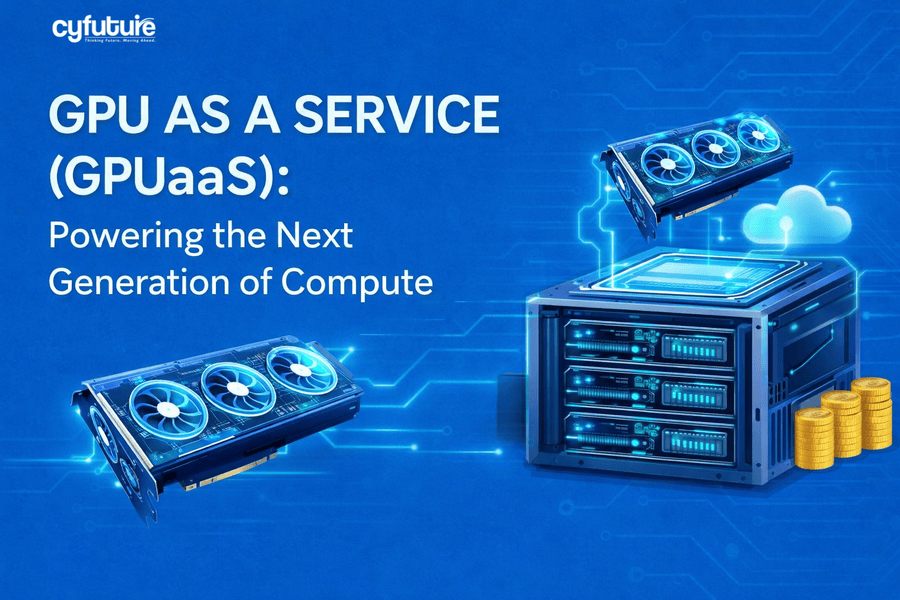
GPU as a Service is a cloud-based offering that provides on-demand access to high-performance Graphics Processing Units (GPUs) and associated infrastructure. Instead of investing in physical GPU clusters, organizations, researchers, and developers can rent GPU resources over the internet, typically on a pay-as-you-go or subscription basis.
This model is a critical departure from traditional on-premises infrastructure. It virtualizes the physical GPU hardware—often featuring top-tier NVIDIA or AMD cards—and delivers it as a scalable utility. Users can access these resources through an API, a platform interface, or a cloud portal, allowing them to instantly provision the exact computational power they need for specific workloads.
GPUaaS fundamentally works by separating the specialized hardware from the end-user environment. The provider manages all aspects of the physical infrastructure, including:
The user, in turn, focuses solely on their application or model, consuming the computational resource as an operational expense (OpEx).
The rise of GPUaaS is not just a technological convenience; it is an economic necessity driven by the financial and operational realities of modern compute.
The primary driver for GPUaaS adoption is cost control. A single high-end GPU can cost tens of thousands of dollars, making a dedicated cluster an investment of hundreds of thousands to millions.
Computational demands often fluctuate dramatically—a deep learning model training cycle may require 100 GPUs for two weeks, followed by a month of low-power inference on a fraction of that capacity.
For AI and ML teams, the speed of iteration is a key competitive advantage.
The parallel processing architecture of the GPU makes it uniquely suited for tasks that involve simultaneously handling massive amounts of data. This has led to the widespread adoption of GPUaaS across numerous high-demand industries.
This is the single largest market driver for GPUaaS.
GPUaaS provides research institutions and enterprises with access to supercomputing-level resources.
The original domain of the GPU has seen a massive boost from cloud access.
The emerging field of AI at the Edge benefits from remotely managed GPUaaS.
The market is characterized by a mix of hyperscale cloud providers and specialized GPU platforms, each with distinct offerings.
The fundamental ways GPU resources are provisioned include:
|
Service Model |
Description |
Best Suited For |
|
Dedicated GPUs |
Full, exclusive access to a single physical GPU instance. |
Workloads requiring maximum, consistent performance; long-running model training. |
|
Virtual GPUs (vGPUs) |
Shared access to a physical GPU, with resources partitioned and allocated flexibly to multiple users. |
Development, experimentation, inference, and cost-sensitive workloads. |
|
Bare-Metal GPU Cloud |
Access to the entire physical server infrastructure with GPUs, offering maximum control and performance bypass for virtualization overhead. |
Extremely large-scale AI or High-Performance Computing (HPC) tasks. |
The landscape is dominated by the major hyperscalers who leverage their massive infrastructure scale and network capabilities, alongside specialist companies offering optimized, AI-first platforms:
|
Provider Type |
Key Players |
Core Value Proposition |
|
Hyperscalers |
Amazon Web Services (AWS), Google Cloud Platform (GCP), Microsoft Azure, Oracle Cloud |
Global reach, deep integration with other cloud services, and vast GPU inventory. |
|
Specialized Platforms |
CoreWeave, Lambda Labs, Vultr, DigitalOcean |
Focus on AI/ML workloads, highly optimized GPU environments, and often competitive pricing/alternative hardware. |
|
Decentralized Networks |
io.net, etc. (Emerging) |
Aggregating underutilized hardware globally to offer significant cost savings, targeting AI startups. |
Despite the immense benefits, enterprises must navigate several key challenges when adopting GPUaaS.
While the pay-as-you-go model offers flexibility, the high hourly cost of premium GPUs means that poorly managed utilization can lead to budget overruns.
For real-time, low-latency applications (like cloud gaming or AI at the Edge), network throughput and latency are crucial. Inefficient inter-node communication can bottleneck performance in multi-GPU training.
Handling sensitive data—especially in regulated industries like healthcare and finance—on a third-party cloud requires stringent security protocols.
The GPU market, particularly for AI/ML, is dominated by one vendor (NVIDIA), and moving complex GPU-accelerated workflows between cloud platforms can be challenging due to proprietary software and environment configurations.
The future of GPUaaS is intrinsically linked to the trajectory of AI, which is expected to continue its explosive growth. The market is projected to grow with a high Compound Annual Growth Rate (CAGR), indicating its centrality to the next wave of computing.
The trend is moving towards more granular and efficient resource allocation. Providers are increasingly offering:
The demand for low-latency AI will push GPUaaS infrastructure closer to data generation sources. Hybrid cloud models, which seamlessly integrate on-premises GPU clusters with cloud bursting capabilities, will become the standard for large enterprises seeking to balance security, cost, and performance.
As high-end GPUs become more power-hungry, sustainability will become a critical differentiator. Providers will invest heavily in energy-efficient data centers, advanced cooling solutions (like direct liquid cooling), and intelligent scheduling algorithms to manage power consumption better and meet global green computing goals.
Increased competition from non-hyperscalers and decentralized networks will drive down prices and increase innovation. This will further democratize access to elite computational power, making AI development more accessible to startups, small businesses, and academic researchers worldwide.
In conclusion, GPU as a Service is more than just a passing trend; it is the definitive operational model for the computationally intensive era of AI. By transforming high-performance computing from a prohibitive capital expenditure into a flexible, scalable, and instant utility, GPUaaS has eliminated the single biggest bottleneck in AI innovation, paving the way for unprecedented technological acceleration across every major industry.