
 709 Views
As Indian businesses continue to grow and go digital, the need for reliable and flexible IT infrastructure has never been greater. From startups launching new apps to established companies managing large amounts of data, many organizations are now turning to cloud hosting in India to support their operations.
This blog explains cloud hosting in a simple way, focusing on how it works, why it matters, and why India has become an important hub for cloud hosting services. The goal is to help business decision-makers understand the basics without technical confusion.
Cloud hosting is a way of hosting websites, applications, and data on virtual servers instead of physical servers. These virtual servers pull resources from a network of powerful physical machines located in data centers.
In simple terms, instead of keeping your data on one computer or server, cloud hosting spreads it across many servers. This setup improves performance, reliability, and flexibility.
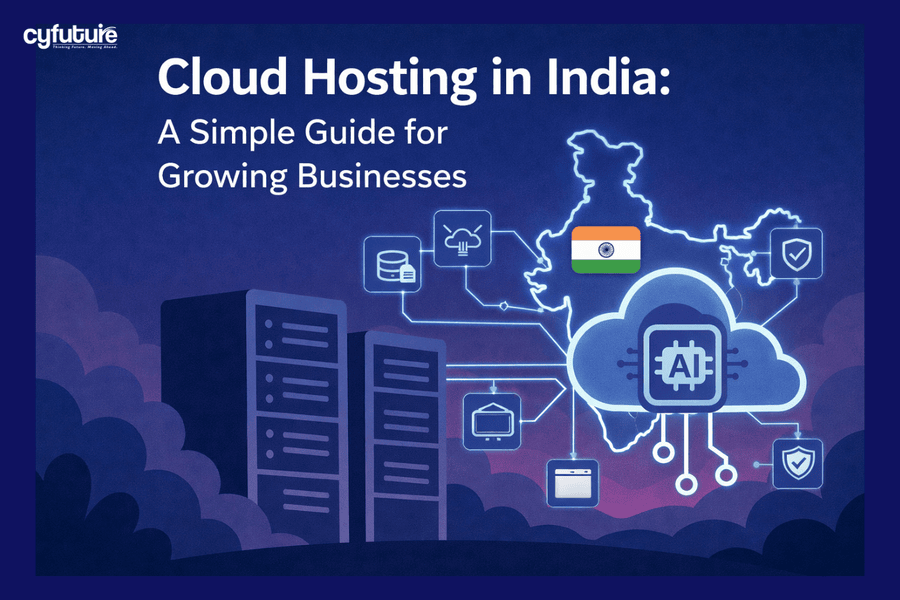
With cloud hosting in India, these servers are located within Indian data centers. This means businesses in India can store and access their data locally while enjoying faster speeds and better compliance with local laws.
Cloud hosting works using a group of connected servers. If one server becomes busy or fails, another server steps in to handle the workload. This ensures smooth performance and reduces downtime.
Here’s a basic look at how it works:
This setup is different from traditional hosting, where your website depends on a single physical server.
India has seen rapid digital growth in recent years. With increasing internet users, mobile apps, online payments, and remote work, the demand for cloud hosting has grown quickly.
Some key reasons cloud hosting in India is expanding include:
Indian businesses now prefer hosting their data within the country for better speed, control, and compliance.
When servers are located closer to users, data travels faster. Cloud hosting in India helps Indian businesses deliver quicker website loading times and better app performance for local customers.
This is especially important for businesses that rely on real-time services like online shopping, payments, or customer portals.
Cloud hosting reduces the need to invest in expensive hardware. Businesses do not need to buy servers, manage data centers, or worry about maintenance costs.
Most cloud hosting providers offer pay-as-you-use pricing. This means businesses only pay for the resources they actually use, making it ideal for startups and growing companies.
Business needs change over time. During peak seasons, product launches, or marketing campaigns, traffic may increase suddenly.
Cloud hosting allows businesses to scale resources up or down quickly. You can add more storage, memory, or processing power within minutes. When demand drops, you can reduce resources and save costs.
Traditional hosting depends on a single server. If that server fails, your website or application goes down.
Cloud hosting uses multiple servers working together. If one server fails, another takes over automatically. This setup improves uptime and keeps business operations running smoothly.
Many cloud hosting providers in India offer uptime guarantees of 99.9% or higher.
Data security is a major concern for Indian businesses. Cloud hosting providers invest heavily in security tools and practices, including:
Hosting data within India also helps businesses comply with local regulations and industry requirements, especially in sectors like finance, healthcare, and government services.
Cloud hosting allows employees to access systems and data from anywhere. This supports remote work and hybrid work models, which are now common across India.
Teams can collaborate easily, access files securely, and use business applications without being tied to an office location.
Businesses can choose from different types of cloud hosting based on their needs.
Public cloud hosting is the most common option. Resources are shared among multiple users, but data remains secure and separate.
This option is cost-effective and works well for startups, small businesses, and general business applications.
Private cloud hosting is dedicated to a single organization. It offers higher control and customization.
Large enterprises and businesses with strict security needs often choose private cloud hosting in India.
Hybrid cloud hosting combines public and private clouds. Sensitive data stays in a private cloud, while other applications run on the public cloud.
This approach offers flexibility, cost savings, and better control.
Cloud hosting in India is suitable for many types of businesses, including:
Any business that needs flexibility, reliability, and secure data access can benefit from cloud hosting.
Before selecting a cloud hosting provider in India, businesses should consider a few key points:
Taking time to compare providers helps businesses avoid problems later.
Here’s a simple comparison:
For most modern businesses, cloud hosting is a smarter and more flexible choice.
The future of cloud hosting in India looks strong. With increasing digital adoption, 5G expansion, and government support for data localization, more businesses will move to the cloud.
Technologies like artificial intelligence, big data, and Internet of Things (IoT) also rely heavily on cloud infrastructure. This will further increase demand for cloud hosting services across industries.
Indian businesses that adopt cloud hosting early will be better prepared to compete, grow, and innovate.
Cloud hosting uses multiple virtual servers connected through the internet to host websites, applications, or data. Instead of relying on a single physical server, resources are distributed across a cloud infrastructure, ensuring better performance, uptime, and flexibility.
Cloud hosting allows Indian businesses to scale resources on demand, reduce upfront IT costs, and maintain high availability. It supports business growth by offering flexibility, faster deployment, and reliable performance without heavy infrastructure investments.
Cloud hosting providers in India implement strong security measures such as data encryption, firewalls, access controls, and compliance with Indian data protection regulations. This ensures business data remains secure and protected from cyber threats.
Cloud hosting offers better scalability, higher uptime, pay-as-you-go pricing, automatic backups, and faster performance compared to traditional hosting. It also reduces hardware maintenance and improves disaster recovery.
Yes, cloud hosting is cost-effective for SMEs in India. Businesses only pay for the resources they use, avoiding high capital expenses. This makes cloud hosting suitable for startups and fast-growing companies.
Absolutely. Cloud hosting automatically scales resources like CPU, storage, and bandwidth based on demand. This ensures consistent performance during traffic spikes and supports long-term business growth.
When selecting a cloud hosting provider in India, consider factors such as data center location, uptime guarantees, security standards, scalability options, customer support, and pricing transparency.
Cloud hosting in India offers businesses a powerful way to manage their digital needs without heavy investments in hardware. It provides speed, flexibility, security, and cost savings, making it suitable for companies of all sizes.
Whether you are a startup looking to launch quickly or an established business planning digital expansion, cloud hosting can support your goals. By choosing the right cloud hosting solution in India, businesses can focus more on growth and less on infrastructure challenges.
As technology continues to evolve, cloud hosting will remain a key foundation for modern business success.