
 484 Views
For a business operating in India today, the primary challenge is not just “going digital,” but “standing out.” Commercial Off-The-Shelf (COTS) software often forces a business to mold its unique processes around the software’s limitations. Custom application development flips this dynamic, building the technology to fit the business’s DNA.
Custom applications are designed to solve specific pain points. Whether it is an automated supply chain tool for a logistics firm in Mumbai or a multilingual EdTech platform for rural markets, custom solutions provide precision that generic tools lack.
In 2026, business agility is paramount. Custom apps are built on modular architectures (like microservices), allowing companies to scale specific features without overhauling the entire system. This is particularly vital for Indian startups that may experience sudden spikes in user load.
While the initial investment in custom development is higher, the long-term Return on Investment (ROI) is superior. Businesses eliminate recurring per-user licensing fees and the “hidden costs” of integrating incompatible third-party tools. In India, where cost-optimization is a core business value, owning the intellectual property (IP) provides a significant competitive moat.
The diversity of the Indian economy requires a wide spectrum of development services. Agencies and IT firms today offer specialized solutions tailored to the domestic and global needs of Indian enterprises.
Modern web apps in 2026 are no longer just “websites.” They are complex, browser-based ecosystems. The focus has shifted toward Progressive Web Apps (PWAs), which offer native-app-like experiences (offline access, push notifications) without requiring a download from the Play Store—a crucial feature for users in regions with fluctuating internet speeds.
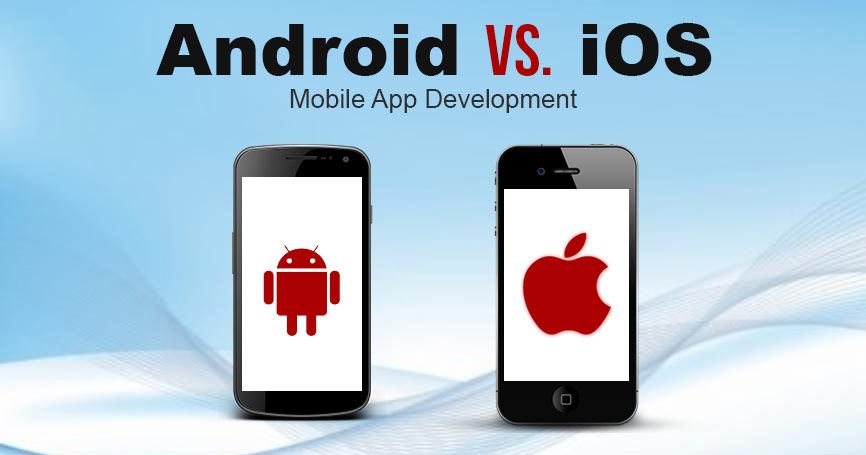
With India having one of the highest smartphone penetrations globally, mobile-first is the default strategy.
Most custom applications built today are “born in the cloud.” Utilizing platforms like AWS, Microsoft Azure, and Google Cloud, Indian developers are building serverless applications that offer high availability and disaster recovery, ensuring that a business in Chennai stays online even during local infrastructure disruptions.
In 2026, an application without AI is considered legacy. Custom services now include:
Success in custom development is not just about writing code; it is about the process. A standard enterprise-grade project in India follows a rigorous Software Development Life Cycle (SDLC).
This is the most critical phase. Developers work with stakeholders to define the user journey, business goals, and technical constraints. In the Indian context, this often involves “localization” planning—ensuring the app supports multiple regional languages and adheres to the Digital Personal Data Protection (DPDP) Act.
User experience in 2026 focuses on “inclusive design.” This means creating interfaces that are accessible to users across different age groups and literacy levels. Prototyping tools like Figma are used to create interactive wireframes before a single line of code is written.
Agile methodology is the industry standard. Development is broken down into “sprints,” allowing the business to see progress every two weeks. Today, many Indian developers use AI-augmented coding tools (like GitHub Copilot or Gemini) to accelerate the build phase while maintaining high code quality.
Testing is no longer just about “finding bugs.” It includes security audits, load testing (to ensure the app can handle millions of Indian users), and usability testing. Automated testing scripts now handle up to 80% of the QA process.
Post-launch support is vital. Custom applications require regular updates to stay compatible with new OS versions and to patch emerging security vulnerabilities.
To bridge the talent gap, many Indian enterprises are adopting a hybrid approach. Simple internal workflows are built using low-code platforms, while the core, high-performance customer-facing features are custom-coded. This “Bimodal IT” strategy allows for rapid innovation.
With the rise in cyber-attacks targeting the Indian financial sector, security is no longer an afterthought. DevSecOps integrates security protocols directly into the development pipeline. Every piece of code is scanned for vulnerabilities as it is written.
As 5G becomes the standard across Tier-1 and Tier-2 cities in India, custom apps are being designed to handle high-bandwidth tasks like real-time AR/VR for real estate “virtual tours” and lag-free telemedicine.
For industries like mining or remote healthcare, developers are building applications that process data “at the edge” (on the device itself) rather than sending everything to a central server, significantly reducing latency.
One of the most frequent questions from Indian business owners is, “How much does it cost?” In 2026, the pricing is highly dependent on complexity and the choice of partner (freelancer vs. mid-sized agency vs. large IT firm).
|
Application Type |
Complexity Level |
Estimated Cost (INR) |
Timeline |
|
Basic MVP |
Simple UI, 5-8 screens, basic DB |
₹4,00,000 – ₹8,00,000 |
2 – 3 Months |
|
Moderate App |
Third-party APIs, Payment Gateway |
₹10,00,000 – ₹25,00,000 |
4 – 6 Months |
|
Enterprise Solution |
AI integration, High Security, ERP sync |
₹30,00,000 – ₹75,00,000+ |
6 – 12 Months |
Factors Influencing Cost:
India remains the world’s premier destination for custom software development, not just for global clients but for the domestic market as well.
Selecting a partner is a long-term commitment. Businesses should evaluate potential agencies based on:
Important Note: In 2026, always check if your development partner is compliant with the latest Indian Cyber Security guidelines issued by CERT-In and the DPDP Act.
Custom application development is the engine driving the “Viksit Bharat” (Developed India) vision. As we move further into 2026, the ability to build, own, and iterate on proprietary technology will be the single biggest differentiator between market leaders and followers. Whether you are a small business looking to automate your operations or a large enterprise aiming to disrupt a market with an AI-driven platform, the right custom software solution is your gateway to limitless growth.
The era of “making do” with generic software is over. The era of the “bespoke digital enterprise” has arrived.