
 145 Views
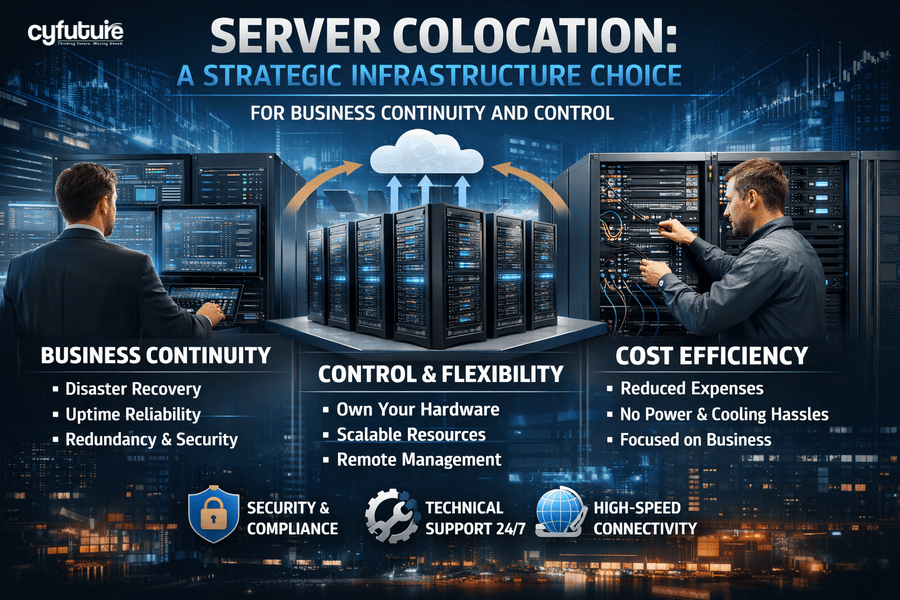
As businesses scale digitally, infrastructure decisions increasingly influence operational stability, customer trust, and long-term costs. While cloud services dominate many discussions, server colocation continues to play a critical role for organizations that require high performance, regulatory control, and predictable infrastructure costs.
For many enterprises, the decision is no longer about choosing between cloud or colocation—it’s about understanding where colocation fits into a broader business and IT strategy. This article examines server colocation from a business perspective, focusing on control, risk mitigation, scalability, and cost optimization.
Modern enterprises operate under tighter performance expectations and higher compliance standards. For industries such as finance, healthcare, manufacturing, telecom, and large e-commerce platforms, fully outsourcing infrastructure is not always practical or desirable.
Server colocation offers a middle ground—allowing businesses to retain ownership of their hardware while leveraging enterprise-grade data center facilities. This approach enables organizations to balance control with operational efficiency, particularly when uptime and data sensitivity are non-negotiable.
One of the strongest business drivers for server colocation is control. Companies using colocation maintain complete authority over their servers, operating systems, applications, and security configurations.
From a strategic standpoint, this allows businesses to:
For organizations with legacy systems or proprietary applications, colocation eliminates the compromises often required in shared or fully managed environments.
Unlike variable usage-based pricing models, server colocation offers stable and predictable cost structures. This predictability is particularly valuable for enterprises with steady workloads and long-term growth plans.
Key financial benefits include:
For finance leaders, colocation simplifies budgeting and helps forecast infrastructure expenses with greater accuracy.
Downtime impacts more than revenue—it affects brand credibility and customer confidence. Server colocation facilities are designed to provide high availability and redundancy, far exceeding what most organizations can achieve in on-premise environments.
Business continuity benefits include:
By housing servers in professional data centers colocation, businesses significantly reduce the risk of outages caused by infrastructure failures or environmental disruptions.
Regulatory compliance continues to be a major concern for many industries. Server colocation allows businesses to meet data residency, audit, and security requirements without relinquishing control over their infrastructure.
From a governance perspective, colocation supports:
This makes colocation particularly attractive for sectors where regulatory scrutiny is high and non-compliance carries significant penalties.
For applications where latency, throughput, and consistency matter, server colocation provides a performance advantage. Businesses can deploy high-performance hardware optimized for specific workloads while benefiting from robust data center connectivity.
Performance-driven advantages include:
These factors directly contribute to better user experiences and operational efficiency.
As businesses grow, infrastructure must evolve without causing downtime or operational disruption. Server colocation supports scalable expansion by allowing companies to add racks, upgrade hardware, or increase bandwidth within the same facility.
From a business growth perspective, this enables:
Unlike on-premise setups, colocation facilities are built to support expansion without major facility upgrades.
Many organizations today operate hybrid environments, combining on-premise systems, cloud platforms, and colocated infrastructure. Server colocation often acts as the foundation of hybrid IT strategies, offering stable performance and control while integrating with cloud services.
Strategically, this allows businesses to:
Colocation becomes a strategic anchor rather than a standalone infrastructure choice.
Security breaches can result in financial loss, legal consequences, and reputational damage. Server colocation facilities provide enterprise-grade physical security that most businesses cannot replicate internally.
Security advantages include:
From a risk management standpoint, colocation significantly reduces exposure to physical and environmental threats.
The global colocation market has matured significantly, offering businesses access to world-class facilities with flexible service models. This maturity benefits enterprises by providing:
A mature vendor ecosystem ensures that businesses are not locked into rigid or outdated infrastructure arrangements.
Adopting server colocation requires careful planning. Business leaders should evaluate:
The most successful colocation deployments align infrastructure decisions directly with business outcomes rather than short-term technical needs.
In industries where reliability and performance directly affect customer satisfaction, server colocation can be a competitive differentiator. Businesses leveraging colocation effectively benefit from:
These advantages translate into stronger market positioning and long-term growth.
Server colocation remains a powerful infrastructure strategy for businesses that prioritize control, performance, and resilience. By combining ownership of critical hardware with the reliability of enterprise-grade data centers, colocation enables organizations to operate with confidence and scalability.
For enterprises navigating complex compliance environments, mission-critical workloads, or hybrid IT strategies, server colocation is not a legacy choice—it is a deliberate, forward-looking business decision.
As digital demands continue to evolve, organizations that integrate server colocation into their broader infrastructure strategy will be better equipped to manage risk, optimize costs, and sustain long-term growth.