 418 Views
Cloud computing has become a transformative force for modern businesses. As we approach 2026, the cloud computing landscape is evolving rapidly, reshaping how companies operate, scale infrastructure, and compete in the digital era.
Today, cloud hosting stands at the center of this transformation by providing scalability, flexibility, and cost efficiency.

Businesses now rely on cloud servers to rapidly scale their digital infrastructure and meet increasing demand while maintaining operational efficiency.
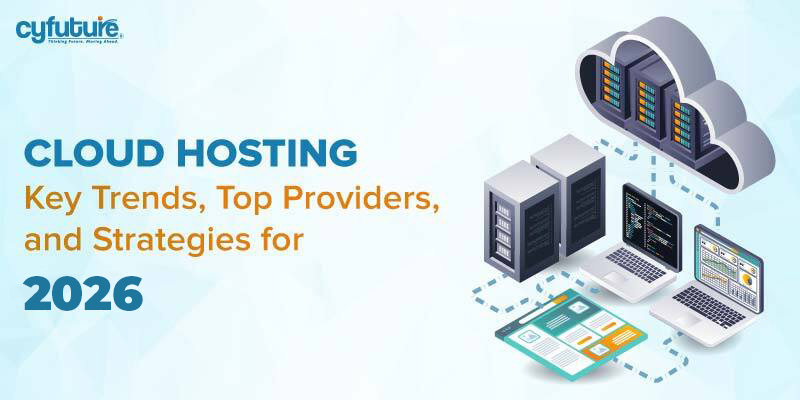
Cloud hosting is a technology that enables websites and applications to run on virtual servers powered by a network of physical servers. Instead of relying on a single machine, cloud hosting distributes resources across multiple servers.
This infrastructure ensures high availability, scalability, and better performance while allowing businesses to pay only for the resources they use.
| Features | Cloud Hosting | Traditional Hosting |
| Scalability | Highly scalable; resources can be adjusted with ease. | Limited scalable; often requires hardware upgrades. |
| Cost Structure | Pay-as-you-go model; costs based on usage. | Fixed cost model. |
| Performance | High performance with redundancy and load balancing. | Performance depends on a single server; limited by hardware. |
| Flexibility | Provide great flexibility in resource allocation. | Less flexibility; resources are tied to a specific server. |
| Reliability | High reliability. | Susceptible to a single point of failure. |
| Customization | A huge customization option is available. | Limited customization option available. |
| Deployment Speed | Rapid deployment; resources are provisioned quickly. | Slower deployment; physical setups required. |
| Security | Advanced security features. | Security is server-dependent. |
| Maintenance | Managed by the service provider; minimal client involved. | In-house or outsourced IT support is required. |
| Geographical Distribution | Globally distributed. | Limited to the physical location of the server. |
| Traffic Management | Handles high traffic at ease. | Traffic spikes may cause performance issues. |
| Backup and Recovery | Automated backup and disaster recovery options are available. | Manual backup is often needed; the recovery process is slower. |
| Resource Sharing | Resources are shared across several servers. | Dedicated resources. |
| Updates and Upgrades | Automatic update and upgrade. | Manual updates are usually required. |
| Environmental Impact | Generally more energy efficient due to shared resources. | High energy consumption due to dedicated server. |
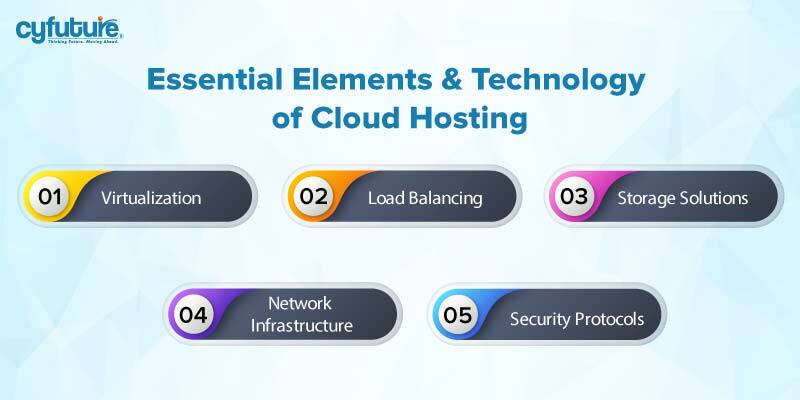
Virtualization allows multiple virtual servers to run on a single physical machine, enabling efficient resource allocation.
Load balancing distributes traffic across multiple servers to ensure optimal performance and prevent downtime.
Cloud platforms provide flexible storage solutions such as object storage and block storage.
A high-performance networking layer ensures secure and fast communication between servers and users.
Advanced security protocols including encryption, firewalls, and intrusion detection systems protect cloud environments.
Cyfuture stands out as a leading cloud hosting provider in India, offering scalable, secure, and high-performance infrastructure tailored for modern businesses. With strategically located data centers across India and a strong focus on customer support, Cyfuture delivers reliable solutions for enterprises, startups, and government organizations.
Pros
Strong presence in India with local data centers
Highly scalable and cost-effective solutions
24/7 dedicated customer support
Robust security and compliance standards
Cons
Limited global data center footprint compared to hyperscalers
Cyfuture Cloud stands out as a leading cloud hosting provider in India, offering scalable, secure, and high-performance infrastructure tailored for modern businesses. With strategically located data centers across India and a strong focus on customer support, Cyfuture Cloud delivers reliable solutions for enterprises, startups, and government organizations.
Pros
Strong presence in India with local data centers
Highly scalable and cost-effective solutions
24/7 dedicated customer support
Robust security and compliance standards
Cons
Limited global data center footprint compared to hyperscalers
Amazon Web Services (AWS) remains the world’s largest cloud computing platform, offering a vast range of services such as EC2 for compute power, S3 for storage, and RDS for managed databases.
Pros
Largest ecosystem of services and tools
Extensive global infrastructure
Advanced capabilities in AI, ML, and analytics
Cons
Complex pricing structure
Steep learning curve for beginners
Microsoft Azure is a powerful cloud platform known for its hybrid cloud capabilities and seamless integration with Microsoft products like Windows Server, Office 365, and Active Directory. It is especially popular among enterprises already using Microsoft technologies.
Pros
Excellent hybrid cloud solutions
Strong enterprise integration
Wide range of compliance certifications
Cons
Can be complex to manage
Pricing can be confusing
Google Cloud Platform excels in data analytics, artificial intelligence, and containerized applications. With strong support for Kubernetes and big data tools, GCP is a preferred choice for developers and data-driven organizations.
Pros
Industry-leading data analytics and AI tools
Strong Kubernetes and container support
Competitive pricing for compute services
Cons
Smaller market share compared to AWS and Azure
Fewer enterprise-ready services in some areas
Oracle Cloud focuses on enterprise-grade workloads, particularly in database management and business applications. It is a strong choice for organizations heavily reliant on Oracle software.
Pros
Optimized for Oracle databases and applications
High-performance computing capabilities
Strong enterprise focus
Cons
Limited ecosystem compared to competitors
Less flexibility for non-Oracle workloads
Ensure providers offer encryption, disaster recovery, and compliance certifications like ISO 27001 or SOC 2.
Choose a provider that supports both horizontal and vertical scaling as your business grows.
Understand pricing models such as pay-as-you-go or reserved instances to control costs.
Ensure the provider meets regional and industry regulations including GDPR or HIPAA.
Confirm whether the provider supports required geographic data storage policies.
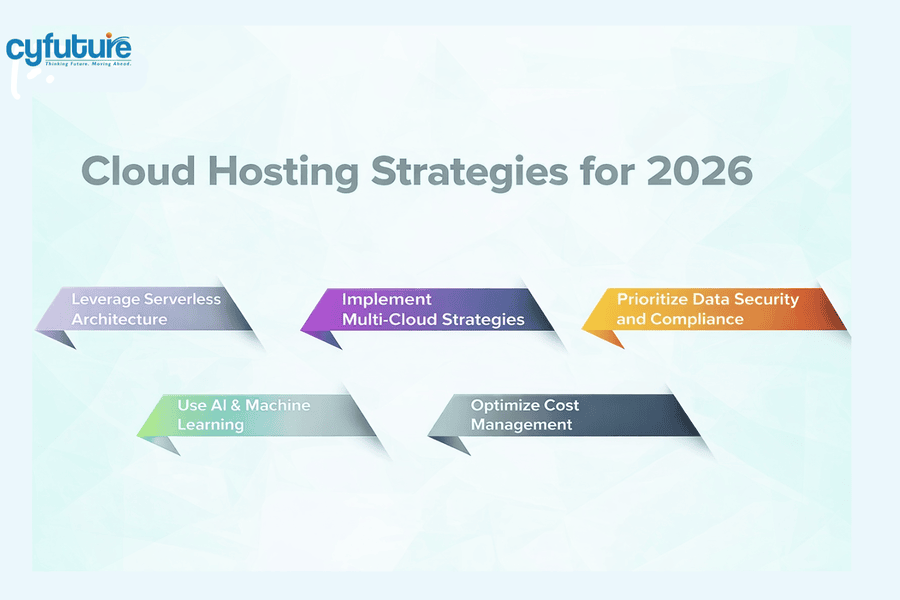
Serverless computing eliminates infrastructure management and reduces operational costs.
Using multiple cloud providers prevents vendor lock-in and increases reliability.
AI-driven cloud platforms help automate processes and enable intelligent decision-making.
Use analytics tools to monitor resource usage and reduce unnecessary expenses.
Cloud hosting has become a strategic necessity for businesses aiming to stay competitive in the digital economy. With growing adoption of cloud-native architectures, multi-cloud environments, and AI-driven infrastructure, cloud hosting will continue to shape the future of IT operations.
Organizations that strategically adopt cloud hosting today will unlock greater agility, scalability, and innovation opportunities in the years ahead.